Water deal makes Malaysians RM6.5b Poorer

Published in Selangor Times in June 2011, which is almost two years ago now. But it’s relevant to look back and remember the details of how the Federal Government took over the bonds of the Selangor water companies totalling RM6.5 billion.

Water deal makes Malaysians RM6.5b poorer

A new chapter unfolded in the long-drawn out Selangor water saga this week. Acqua SPV, a Special-Purpose Vehicle set up under the Federal Government body PAAB (Pengurusan Aset Air Berhad), announced its plans to acquire 100 percent of Selangor water bonds. The total outstanding bonds come up to RM6.5 billion.

This basically means that the Federal Government is using tax-payers’ money to settle the debts that water concessionaires owe to their bondholders.

How did things get so complicated? Well, if readers recall, sometime in November 2010, the Selangor government and its supporters marched under the stark KL heat to present a memorandum to the Agong, which called for the deprivatisation of lucrative water concessions that benefit cronies. Teargas and water cannons were freely used, but this should not have come as a surprise.

The story thus far is this: As part of a national water restructuring exercise, all states are supposed to sell their water assets back to PAAB temporarily until they are financially secure enough to inject their own capital expenditure.

Two Acts were passed in this regard, the Water Services Industry Act 2006 and the Water Services Commission Act 2006. This was done on the understanding that the water industry would be eventually renationalised, as they were before.

All fine and dandy, except that Selangor has the most complex of situations, having the most number of private companies: Abass, Puncak Niaga, Splash and Syabas, the latter having a monopoly over water distribution.

Water talks were protracted over more than two years, during which time all offers by Selangor were in one way or other turned down by the companies mainly because they were not considered high enough.

Bondholders Storm 

And in the midst of all this, another storm was brewing. When the water companies began operations, they sold RM9.02 billion worth of bonds to fund their startup activities under seven different bond programmes. These bonds were purchased by a large number of banks and financial institutions, including the likes of Great Eastern Life Assurance (M) Bhd, CIMB Group Holdings Bhd and the Employees Provident Fund (EPF).

When water negotiations seemed endless with no conclusion in sight, a few things happened: rating agencies downgraded these bonds impacting their values, and the issuing water companies were unable to service the bonds that would be maturing. The reason for the ill financial health of these companies was simple.

Syabas buys treated water from treatment companies Abass and Splash, and in turn sells it to customers: you and me. Syabas was not paying what was fully due to these two companies, thereby affecting their cashflow. They in turn pointed their fingers at the Selangor government for not allowing them to increase tariff rates that they claim are part of the concession agreement. Selangor disagrees, saying certain conditions were not fulfilled. The case has been brought to court and is ongoing.

The bondholders, of course, are not necessarily concerned with the minute details. As far as they are concerned, they purchased bonds which they felt were in a secure and stable industry. Nothing is more safe than a utilities sector, after all, or so they thought.

Buying Back Bonds 

Fast-forward to last week. Because the water restructuring has not yet concluded, the Federal Government decided that it would soothe the nerves of these bondholders. It is understandable that they would want commensurate return on their investments, in principle.

However, the onus lies equally on the investing partner to investigate the health of the company’s bonds. In this case, clearly the companies were not in the best conditions to begin with.

The move of the Federal Government in swooping down to buy over the outstanding bonds essentially means that all responsibility of the companies to their creditors is completely absolved. With their debts resolved absolutely, what incentive have they to proceed with water talks with the Selangor – or any other – government?

The argument given by the government is that any default of these bonds would result in cross-default in other bonds, leading to a “systemic meltdown of the Malaysian capital markets and erode investors’ confidence locally and internationally”.

I may not be an investment banker, but is the government not rewarding investors for choosing their portfolios foolishly? Worse, the burden is carried by the tax-payers nationwide, not only in Selangor and Kuala Lumpur.

In fact, it was stated explicitly that a bond default would impact PAAB’s and the federal government’s ability to raise funds for existing and future infrastructure projects at competitive pricing. It is a rather large leap to take here. Think “Mega Project 101”, and the likes of  “MRT”.

Privatising Profits, Socialising Losses  

What we are hearing is essentially that government is willing to sweep under the carpet bad debts for the sake of creating potentially devastating situations in the future, when or if there are further defaults on even larger-scale infrastructure projects under the Economic Transformation Programme (ETP).

This comes at a time when the same Minister (of Energy, Green Technology, and Water) just announced an electricity tariff increase which will impact upon all consumers intrinsically. This is an additional burden placed upon Malaysians, whilst in the meantime our friendly neighbourhood financial institutions recoup their funds easily. This is a classic case of the government privatising profits and socialising losses.

Finally, this is a sordid state of affairs because not only is this move considered a distinct bailout of the water companies, it does not even resolve the more urgent issue at hand: the water restructuring itself. The Association of Water and Energy Research Malaysia (AWER) said in a statement that first, the entire problem is passed straight to the people and businesses to pay off, and second, PAAB is “just saving the bondholders without relinquishing the stakes of affected concession agreement holders”.

This is a dark day for us in Selangor and beyond, and it is a sign that the Federal Government is not serious about pushing the private concession companies all the way to comply with the WSIA’s holistic and renationalised model. This is a temporary measure that is clearly biased towards one party – not us taxpayers, for sure.

Posted in Economics, Selangor | Leave a comment

A Matter of Power

In Pakatan Rakyat’s recently released 13th General Election Manifesto, it said it would dismantle monopolies. I had written this article way back in May 2011 to criticise the power purchase agreements that are not transparent. Looks like restructuring these agreements is going to be a priority.

A Matter of Power

As far as I can tell, the economy is a matter of national significance. And in turn, anything with such far-reaching implications, impacting keenly upon the pockets of every man on the street in Malaysia, cannot be kept under a thick shroud of secrecy.

Currently, the power purchase agreements between independent power producers and Tenaga Nasional Berhad (TNB) are classified under the Official Secrets Act. The Energy, Green Technology and Water Minister stated recently that the Government cannot compel these agreements to be made public as “they are signed by private entities”.

The Government had recently announced an average of 7.12 percent hike in electricity tariffs as part of its subsidy rationalisation exercise. Natural gas prices will also rise by RM3 per mmBtu starting now and every six months until it reaches market rates in 2016, by which time prices will be fully floated.

The statement was quick to point out that domestic consumers paying less than RM77 monthly, i.e. 75 percent of the Malaysian population, would not be affected by the scheme in this regard. The Deputy Prime Minister then went on to say that traders, manufacturers and retailers should not use the electricity tariff hike as a reason to increase their prices of consumer goods, as it is “only a seven percent increase”. The Government has also stated that inflation would only increase by 0.27 percent as a result of the electricity tariff increases.

Surely it is not so ridiculous as to imagine that retailers and traders would inevitably be cracking their heads on how not to increase their prices as overheads rise steadily. After all, their businesses would only thrive when costs are minimised in order to maximise profits – is this not what Malaysia Inc. is supposed to look like?

The argument is classic, that subsidy cuts and tariff increases are necessary to plug the country’s looming budget deficit, by reducing our massive annual subsidy bill. The Government has forked out RM131.3 billion in gas subsidies between 1997 and 2010, for example.

Some economists might argue similarly, that subsidies present distortions of the economy that must be removed to allow principles of the free market economy to flourish.

But that is only assuming we really do operate within a free and vibrant market economy. In reality, the anger and frustration expressed by Malaysians are directed more towards the fact that large government bailouts have occurred through the years, especially over the last three decades, where companies operating at a below-competitive level then continue to survive. Furthermore, with the numerous developmental plans (think 10th Malaysia Plan, and so on) we are accustomed to in Malaysia, more often than not we operate under the auspices of a planned economy.

Some political parties claim that as much as RM19 billion is given as a subsidy itself to independent power producers annually, to whom Petronas sells its gas at a lower than market price. Of course, this figure would only be substantiated if and when the documents are publicly revealed.

In fact, subsidies to the IPPs accounted for more than half (58.7% or RM8.1 billion) of the total gas subsidy for the power sector (RM13.8 billion) in 2008, where IPPs consume about 60 percent of the natural gas in Malaysia. (Zainal Aznam Yusof, 2009).

The current stance of the Government seems to be that one, the purchasing power agreements cannot be unveiled to the public, and two, these deals that were signed many years ago can only be renegotiated after the contracts lapse. If there is an understanding that some renegotiation will soon take place, does this mean that only a select few within the corridors of power are mandated to make a decision that affects all layers of society?

The Federation of Malaysian Manufacturers (FMM) has also released a strongly-worded statement calling for greater transparency and predictability in energy pricing in view of “uncompetitive tariffs and inefficient supply chains”. It says that although Malaysia pays less for natural gas compared to its regional neighbours Thailand, Singapore and Indonesia, the cost of electricity following the hike is at par with Thailand.

In 2009, the Government made the decision to declassify the highly-controversial highway concession agreements, the contents of which were a revelation namely that there exists an expropriation clause allowing the government to buy back the concessions at a stipulated rate. The public was then able to engage on a matter that would invariably affect them as opposed to leaving all matters to the decision of a select few. It is for this reason a Freedom of Information Act ought to be enacted at the national level, the state version of which has already been passed in Selangor.

The Deputy Prime Minister said that the Government has already looked in-depth into the possible implications of the new power rate on the cost of living, inflation rate and prices of goods, implying that the tariff revision was done with the full knowledge of the potential impact on Malaysians.

As a member of the public myself, I would love to know what conclusions the Government came up with. What are the economic projections on the labour market? On low-income and semi-industrial wage earners? On businesses and traders?

In all reality, unless the purchasing power agreements are declassified, nobody outside of a little secret room in Putrajaya would know.

Posted in Economics, Elections | Leave a comment

Moderates and Extremists: That Thin Line

Malaysia is supposedly the leader in the “Global Movement of Moderates” – would you agree? A version of this was published in theSun in May 2011.

Moderates and Extremists: That Thin Line

It was a rare moment I nodded my head in agreement when reading an excerpt of Prime Minister Najib’s speech at the Oxford Centre for Islamic Studies recently: “…the real divide is not between East and West or between the developed and developing worlds or even between Muslims and non-Muslims. It is between moderates and extremists of all religions”.

This is certainly the case in Malaysia, but the problem seems to be defining what ‘extreme’ means on either end, and then implementing serious measures to nip it at its bud.

Recent incidents have left Malaysians – both Muslim and non-Muslim – feeling frustrated and disappointed. Frustrated because we know these have stemmed from a gross misunderstanding of the other, and disappointed because we feel there would be a better way of resolving it.

After a Malay daily accused Christian leaders of working with the DAP (Democratic Action Party) to make Malaysia a Christian state and installing a Christian Prime Minister, the Home Ministry issued it a warning letter for publishing an unsubstantiated report. Although the Prime Minister has met with Christian leaders who pledged to respect Islam as the religion of the Federation, the Home Minister has said there is some basis to the reports.

‘One of my own’?

Since so few of us in the public domain would actually be able to ascertain the veracity of what took place that day – I am in no position to say ‘this’ or ‘that’ was uttered – perhaps it would be more important to address the underlying motivations driving these actions on both sides.

Adherents of a particular religion may desire for others within their same faith to occupy positions of power and decision-making. This is most particularly visible when they form the minority in a certain country.

Now, this is an interesting phenomenon to examine. Why do people want their ‘own kind’ to be in positions of authority? This automatically assumes that all people within a certain group subscribe and adhere to the same set of rules, norms and values – after all, this is what organised religion is about. And these natural assumptions also mean people can more likely rely upon the judgment of one of their own when making policy decisions that affect their lives intrinsically.

To illustrate this, Muslims may desire other Muslims to be in a particular committee in order that decisions can be swayed in a way that promotes “Muslim values”, much in the same way Christians would encourage other Christians to work in the public space to advance “Christian values”. Again, this assumes that there is a universal set of values that followers of a doctrine would believe in.

In reality, these may be a lot more tempered by situational conditions, political negotiations, economic trends and other variables that shift accordingly, rendering this ‘value set’ fluid and amoebic. In reality, how likely is it that the person you vote in because of his or her religious tag would behave in accordance to your values?

Common good            

More ideal would be for those religious values and beliefs which matter most to be considered as part of a growing common language between the religions of Islam and Christianity, as well as that of all religions – and then supporting the people who demonstrate these instead.

And what is this belief system that is most logically advocated? It would be one representing justice, fairness, kindness, truth, honesty – the application of which is universal for the common good and collective wellbeing of people in Malaysia.

In the meeting between the Prime Minister and religious leaders, the same old statement of promoting tolerance, harmony and peace in Malaysia was repeated. Sure, all that is well and dandy, but how about some concrete initiatives to draw the moderates together?

It would do us all a whole lot of good if religious leaders of all faith groups could pro-actively join forces in fighting corruption and domestic abuse, cleaning up rivers, advocating women empowerment, and encouraging those from different faiths to learn about each other in a deep and meaningful way, i.e. not merely celebrating cultural festivals alone.

Although the great divide is between the moderates and the extremists, there is some serious self-examination that must be conducted amongst us all, regardless of what we think of ourselves. Once both parties stop believing they are under siege from the other’s wily tactics, calm and reason would emerge as victor.

Of course it would make no sense for our leaders to simultaneously promote religious harmony and moderation, and in the same breath harness the convenient extremist tools for their own political ends. And it is this the people must recognise and not fall prey to. Prime Minister Najib has a tough battle to fight, but in doing so he must be willing to recognise the extremists for who they really are, and deal with it accordingly.

Posted in Ethno-Religious Politics, Religion | Leave a comment

Selangor passes two key reform bills

It is good to reflect on what kind of legislative reforms have taken place in the Pakatan-led states. This came out in May 2011 in the Penang Monthly on the Freedom of Information Enactment passed in Selangor.

Selangor passes two key reform bills

In March 2011, exactly three years after the government of Selangor state changed hands, two key pieces of reform legislations were passed. With that, the policy competition that had been expected since the last general elections between governments at different levels goes into high gear.


Policy reforms can be a drawn-out and laborious process, but once in a blue moon you get a sudden windfall – and this makes it all worth the wait. In the March 2011 Selangor State Legislative Assembly sitting, two significant things took place.

First, the Freedom of Information (FOI) Enactment Bill (Selangor) 2010 was tabled for the third and final time, thereby creating Malaysia’s very first FOI Enactment (whether at state or national level).

Second, the state assembly also passed an amendment to the National Forestry Act 1985 to require public inquiry before any de-gazetting of forest reserves.

For policy-making junkies, these two pieces of legislation are no doubt stellar events. In truth, the processes by which they were finally produced are also equally fascinating. This is what this piece will explore.

Freedom of Information Enactment 2010 

The idea of having a FOI Enactment is not new in Malaysia. More than five years ago, Tan Sri Khalid Ibrahim (now the Selangor Menteri Besar) mooted the idea of pushing for such an Act at national level. I was one of about a dozen civil society individuals he invited to lunch back in 2007 at the Lake Club, Kuala Lumpur to discuss the possibility of such a campaign. He was also interested in the campaign for local elections (which I will write about in a later column).

Although it was not conceivable at the time, he did make a commitment to the NGOs then to make the FOI the first reform legislation to be passed, once given the mandate to form a government. Looking back, it does weigh in as a major achievement by the state government. But the process was not always a straightforward one.

First, an executive councillor was placed in charge of forming a taskforce. This was Elizabeth Wong. Members of her group included government and civil society representatives. The Coalition for Good Governance (CGG), a vocal coalition of NGOs based in the Klang Valley, was an active participant at its meetings and discussions. It also undertook the task of preparing the first draft legislation. Some members of the CGG who invested much time and effort included the Centre for Independent Journalism (CIJ) and the Malaysian Bar.

Next, the draft was revised several times including being vetted by the State Legal Advisor before it was officially signed at an executive council meeting. This final version, originally drafted in English, was then translated into Malay and ready to be tabled as the Executive’s proposal to the Legislative Assembly.

The Bill went before the body for the first time on July 14, 2010 and was then sent to an FOI Select Committee, which conducted extensive research, meetings and public inquiries. This was the first time that the Selangor State Assembly had formed a Select Committee to examine a bill, demonstrating a level of thoroughness not previously displayed.

The Select Committee, chaired by Shaari Sungib, originally consisted of six members: four Pakatan Rakyat assemblypersons and two Barisan Nasional assemblypersons. However, neither of the two from Barisan Nasional attended any of the meetings and public inquiries. This was a missed golden opportunity for them to demonstrate their willingness to put aside political differences and work towards solid policy and legislative reform. Nevertheless, it is understood that the sessions were lively and productive.

Over nine months, feedback and suggestions from civil servants, NGOs and members of the public were taken into account. The first draft was heavily criticised by several NGOs. This period thus proved to be a valuable opportunity for issues to be addressed and the discussions were healthy and crucial in ensuring that especially public servants were aware of the reasoning behind it. They would after all be its key implementers.

Some of the recommendations adopted from the Select Committee include: i) allowing local councils and government-owned entities to be covered under the Enactment; ii) changing the Appeals Board into the State Information Board; and iii) extending penalties to cover obstruction to access to information.

However, there are certain limitations to the Enactment. For instance, its jurisdiction extends only to state government bodies and not to federal bodies. Selangor (and all other states) houses numerous agencies that are essentially seconded from the federal government. Although Selangor pays their salaries, federal civil servants are not subject to enactments passed by the State Assembly. It is important for the public to realise this difference, since their expectations may be warped by a misunderstanding on this score.

Several challenges may surface. For example, Selangor will have to avoid having the Enactment being declared ultra vires by the federal government. The federal government has in fact stated that the FOI would be in contravention of the Official Secrets Act 1972. Second, training for civil servants and a process of public education will be essential to smoothen the execution process. For decades Malaysian society has been used to a culture of shrouded secrecy, and this Bill is now radically introducing a new culture of openness and transparency in public administration.

Finally, there may be chinks in the Enactment that will only be evident upon implementation. At these times, the Enactment – meant to be a dynamic and living legislation – will possibly be improved on based on recommendations from the State Assembly. What is most important is that the process has begun. Penang has also followed closely behind by tabling the first reading of its FOI version in November 2010.

Amendment to the National Forestry Act 1985 

The Selangor State Assembly also passed a historic amendment to the National Forestry Act 1985 (Section 11). Selangor is the first state to make public inquiry compulsory before a forest reserve can be de-gazetted. The public will now be able to give their opinions, suggestions and constructive criticism before forest reserves are de-gazetted. Elizabeth Wong, also the executive councillor in charge of the state’s Environment portfolio, tabled it at the same March 2011 sitting.

In her speech to the Assembly, she stated that thousands of hectares of forest reserves were cleared without public knowledge from 2000 to 2007. For example, the Kota Damansara Forest Reserve was de-gazetted several years ago during the Barisan Nasional state government to make way for luxurious residences. It was only when the Pakatan Rakyat government took over that this land transfer was cancelled.

She emphasised the importance of forest reserves in ensuring environmental stability through the supply of clean water, good quality air, mitigation of floods and soil erosion, in biodiversity sustainability, and as a source of herbs and natural medicines.

This display will hopefully encourage public participation in policy decision-making. Following this amendment, public dialogue sessions will be compulsory, advertisements of which will be placed on public signboards and newspapers. Notice will be given early enough to ensure that residents and NGOs attend these meetings and provide their opinions.

Under Section 74(2) of the Federal Constitution of Malaysia, forestry is under state government jurisdiction, which means each state is empowered to formulate laws and policies pertaining to the forestry sector. In this instance, the Selangor government has worked closely with the Selangor State Forestry Department and it is the latter that will implement this policy in the future.

What reform means

During times of change, public expectations can skyrocket. This was the case in all Pakatan Rakyat states after March 2008. The more difficult task is to get down to the nuts and bolts of policy reform, managing expectations and pushing for the workings of the administration to be better oiled.

And although it is not every day that there is positive news to report, this month was a particularly proud one for the people of Selangor.

For example, the Commonwealth Parliamentary Association (CPA) will be showcasing Selangor’s FOI Enactment on its newsletter’s front page. This will be a real boost for Pakatan Rakyat globally.

As truly reformative measures within the Pakatan Rakyat states get going, it is hoped that a culture of accountability and good governance will permeate into all nooks and crannies. Sarawakians went to the polls in April, with optimistic results. Seeing how things are developing, true reform in Malaysian politics is a matter of time.

Posted in Selangor, The Cause | Leave a comment

Let’s start talking to one another as a nation

This was written a while back in May 2012, published in the Selangor Times.

Let’s start talking to one another as a nation

It seems to be a worldwide phenomenon that people are driven by insecurity and fear, especially of what they do not understand or know. When news of Osama bin Laden’s death came in, Americans rejoiced on the streets. In this tit-for-tat world, a murder was cleverly orchestrated and celebrated, in the end boosting the public perception of US President Obama whose ratings had been previously falling.

For the less bloodthirsty of us, it was discomforting to note the level of enthusiasm displayed. Sure, the man was instrumental in the deaths of so many, but, as some have pointed out – the modus operandi was distasteful. He was unarmed and did not fire any weapon when the killing took place, a decision the US embarked upon unilaterally without international consultation.

The celebratory response was only too telling of people’s ignorance. Surely this would not stop ‘terrorists’ from detesting the West’s arrogance. But the ignorance runs deeper, not knowing what Islam truly stands for and thereby creating a culture of fearing Muslims amongst many conservative Christians, the worst sort of generalisation, which national leaders take advantage of for political gain.

But they are not the only ones guilty of politicising fear and insecurity. I witnessed the same being cultivated in the recent run-up to the Singapore elections, where the PAP (People’s Action Party) government used stability and economic wealth to woo voters, threatening that the opposition parties would fail to deliver and hence jeopardising Singaporeans’ quality of life.

Fear and Insecurity on Home Ground

Back home, we are probably the worst lot. The human race is already prone to bouts of fear and insecurity as a natural instinct, but in Malaysia it is made worse by the multitude of sub-cultural groupings of ethnicity and religion. The mantra is true, that political parties have capitalised on both race and religion for their own personal gains at the expense of national unity. How so?

Most recently, following the success of the DAP (Democratic Action Party) in the Sarawak state elections (winning 12 out of its 15 contested seats), there was some concern expressed that its dominance in the Pakatan Rakyat coalition would juxtapose a Chinese-strong opposition against a Malay-strong Barisan Nasional coalition (where UMNO calls the shots and other parties meekly comply).

This has culminated in a rather bizarre chain of events. A Christian meeting in Penang organised by the National Evangelical Christian Fellowship (NECF) with other partners was accused by pro-UMNO bloggers of conspiring with the DAP to first, replace Islam with Christianity as the country’s official religion and second, to put a Christian Prime Minister in office. Christian leaders denied that these calls were part of the session, which they say was an ethical seminar organised to “discuss and address the issue of bribery and corruption in the marketplace and the Christians’ contribution in addressing such issues.”

Just preceding this, Pembela, a coalition of 20 Muslim bodies, issued a statement expressing concern that Islam’s position in Malaysia is under siege. The Malaysian Consultative Council for Buddhism, Christianity, Hinduism, Sikhism and Taoism (MCCBCHST) responded with their own statement, in which they say Muslims’ position would never be threatened in Malaysia, as they would still possess political control being in the majority.

Thus began the domino effect, the seemingly unending downward spiral. The DAP, the Bar Council, and a group of NGOs which includes the Centre for Independent Journalism, responded in uproar, essentially implying that no verification was done to prove the accusation against DAP was true. Perkasa demanded punishment imposed on those challenging Islam as the country’s official religion; a police report was made on the Bar Council’s constitutional committee lawyer who said there was “no official religion” in Malaysia. The verbal banter goes back and forth – it is like watching a badminton game live on court.

Shut Out the Noise and Think

All that is taking place in our country is not new. New incidents, perhaps. But these are merely manifestations of a deeply rooted problem. They stem from age-old sentiments of ignorance of “the other”, which are for years and years never corrected. Prejudices that stick like cling-wrap, which teachers, parents, and mentors never bother to change. And this is the real indictment on our leaders and elders: that the generations to follow will adopt these false notions of people outside our respective comfort zones.

The noise that has been churning around for the last week are symptomatic of the problems yes, but they are also being made by groups intentionally stoking the fire. In the debate that revolves around race and religion, for the rest of us who are by-standers, it is not good enough to passively allow these extreme views to represent that of our own. That is not innocence. The critical mind must shut out the noise and stop to think.

Christians have to realise that Muslims are genuinely fearful of evangelical Christians. Under such circumstances, Christians must address this fear first and foremost, or risk further suspicion and anger.

Muslims, on the other hand, require some soul-searching to rid themselves of any false insecurity and fear on their part. With the instruments of the law, the Federal Constitution, government and religious institutions at their disposal, there should be adequate security that their faiths are not, in fact, being threatened.

The wishy-washy answer is to “start talking to one another”. Friendships abound between adherents of different faiths. But this is not enough. Conversations have to dig deeper into unveiling the prejudices against the other, which can be a painful process. Perhaps false misconceptions can then be corrected.

A preference, of course, would be to see each other as humans first – never mind which God one prays to, resisting the temptation to save the person opposite you from the doom of Hell, and treating the person as if he were someone whose views and conversations you would perfectly enjoy in a regular Malaysian mamak stall because of his humanity and dignity. A player in this merry mess put it aptly: “Allowing the debate over which race or religion wielded precedence in the matter of who is qualified to become a holder of high office … diverts from what is more important … a person’s intellectual and moral fibre for high office.”

We criticise the West for their foolhardy reactions against the Taliban, al-Qaeda and the like. But the real question is, do we not feed ignorance, fear and insecurity on home ground itself? And the ugliest of them all is that the ruthless game of politics has reared its vicious head to capitalise on this. Creating divisions for selfish gain. The only way out is – for us, the people, to stop fearing and start learning. About each other. Properly. For real. We have to do this. To save our souls from the eternal damnation of politics.

Posted in Ethno-Religious Politics | Leave a comment

SG Elections: After The Workers’ Party Rally & Further Thoughts

SG Elections: After The Workers’ Party Rally & Further Thoughts

First posted in LoyarBurok.com on 4th May 2011

LoyarBurokker Tricia continues her Singaporean political tour, ahead of their 16th general elections. This time she attends a Workers’ Party rally in a constituency which represents the lower-income class of Singaporean society.

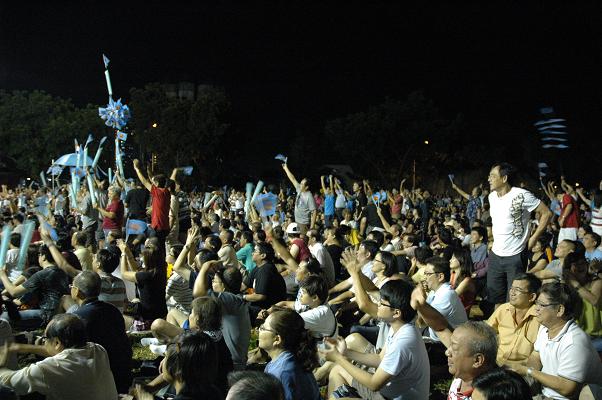
Continuing my political tour, I tramped out to Kallang Avenue where the Singaporean opposition Workers’ Party is standing in the Kallang Moulmein Group Representative Constituency (GRC). My immediate reaction was that this felt a lot more “Malaysian”, a slightly more gritty atmosphere that I am used to back home. The pathway to the large field was a little more convoluted, crowds spilling out in all directions, stalls selling food and drinks, and the speaker shouting in a more typical ceramah style than the previous night.

The constituency itself represents a different demographic altogether: the lower-income class of Singaporean society, the one rarely depicted in the country’s flashy public persona. This caste is often forgotten in all the haze of glitzy Marina Bay Sands, Sentosa and Orchard Road (except perhaps by indie film-makers). These are occupants of one or two-bedroom apartments, families whose children cannot afford tuition (which by the way is the staple of ordinary Singaporeans), and whose income barely survives daily needs. One PAP representative commented that they can survive on S$1 a meal, but this obviously means he has not paid for his own meal in a while.


Photo by Tricia Yeoh

Photo by Tricia Yeoh

Labour Market Issues

The Workers’ Party hit home in its choice of election speeches. The party itself is one of the oldest opposition parties in Singapore, accepted by the PAP government to take its role as “opposition” (perhaps more so than the SDP with its civil society-activist roots). Its logo is the hammer, reflective of the labour issues it champions. Last night, this held true in its ability to weave in the central theme of rising costs of living within all speakers’ points.

Foreigners who troll luxurious bars in Singapore may not notice, but there is a significantly large proportion of Singaporeans (gravitating around the Chinatown and Little India neighbourhoods) who live hand to mouth. Candidates from Gerald Giam, Frieda Chan, Mohd Rahizan bin Yaacob to the ever-popular incumbent (one out of the only two opposition Members of Parliament, the MP for Hougang since 1991) Low Thia Kiang spoke on Singaporean wages being depressed and insufficient to meet increasing transport, food, housing and healthcare costs.

The Minister of National Development, Tan Mah Bow, received special mention and the crowd’s abhorrment of the man was apparent: a full two minutes of boos. It is not an uncommon phenomenon that Singaporean couples delay marriage due to inability to afford a home. “As far as I know, a man and a woman need to be together for the lady to get pregnant! How can we increase our birth rates this way?” The cheapest low-cost Housing Development Board (HDB) flat costs an average of S$250,000 to S$300,000 and even with double incomes, young blue-collar couples can ill-afford to buy and own homes of their own.


Photo by Tricia Yeoh

Photo by Tricia Yeoh

Another sore point with many is the country’s healthcare scheme. This would be of interest as the Malaysian government attempts to introduce new healthcare policies in the future. In Singapore, employees’ salaries are compulsorily deducted to contribute to a “Medisave” account, in addition to a portion which the employer also pays. Operating much like the Central Provident Fund (CPF), or the Employees’ Provident Fund (EPF) in Malaysia, there are rules and regulations for withdrawal. The idea behind it is the government obliges individuals to save for their own medical care, and also acts as a retirement fund of sorts. However, because of such stringent requirements, Singaporeans are unable to make use of these funds anytime they wish although it is their own hard-earned cash. It is a classic case of government intervention vs. freedom of citizens to decide for themselves.

Increasing costs of living come in other forms such as the Goods and Services Tax (GST) that the government unpopularly increased to 7% just six months after it promised not to in the 2006 elections five years ago. This the Workers’ Party capitalised on. Although some point to the “benefit packages” the government recently returned to the people, this, as the candidates called out on stage, “is the people’s money, not the government’s money”. That the government is able to induce feelings of gratitude for the return of money rightfully belonging to the people in the first place is testament to the wonders of mainstream media and decades of indoctrination.

This rally was multi-ethnic and again candidates responded well — speeches were in numerous languages: Mandarin, Hokkien, Malay, Tamil and English. The tone was reminiscent of Malaysian speeches, but the beauty of it lay in Yaacob’s remark — that it is about returning dignity to the people of Singapore. I am not altogether familiar with the Malay political fabric in this city-state — Malays apparently swung to the PAP in the last elections. What is true is that Malays are over-represented in prisons and have slightly lower incomes on average.


Photo by Tricia Yeoh

Photo by Tricia Yeoh

Disintegrating Social Structure?

Although the issues varied greatly from that which I was exposed to the night before in a higher-income constituency, the gripping story that seems to be unfolding for me is one and the same.

The social equation that then Prime Minister Lee Kuan Yew instituted may have worked in the past, but this is rapidly changing. With openness, exposure to the world’s political and democratic shifts, the young Singaporeans (yes, even those within the civil service) are no longer satisfied with the age-old adage of being economically driven alone. The merits of these benefit neither those who attain its riches at the cost of self and of being, nor those who hunger after it in futile desperation. Some middle quotient should be struck as an ideal, in the long-term planning of both Malaysia and Singapore, perhaps modelling less after the great industrial giants and instead seeking balance with an emphasis on quality of life not necessarily tied to capital growth and asset accumulation. “Sustainable development” as a buzz term ought to be the appeal but no Asian nation seems to have gotten it right. Yet.


Photo by Tricia Yeoh

Photo by Tricia Yeoh

Political Reforms in Singapore

A few words on the political structure, which requires a separate article altogether but for now — the GRCs were originally created to ensure equal ethnic representation. To put forward a multiethnic team of four makes sure at least a Malay or Indian has a voice in Parliament, where you would win four seats in one fell swoop. (The reasoning is that because Singapore is so Chinese-dominant, there would be less incentive for any non-Chinese to be voted in). However, this is an easy winning formula for the PAP, as the burden falls upon the opposition to field several candidates at a time, operating as it is under severe resource constraints. The PAP’s mantra of “Look at us we are multiracial we have a Chinese Prime Minister Malay Speaker of Parliament Indian President we are one” is silly and demeaning of the minorities’ abilities to act for themselves.

The seats should be separated into single member constituencies to ensure Members of Parliament can truly represent their own areas, and within smaller geographical boundaries. That extremely strange electoral delineation is conducted (extending Lee Kuan Yew’s Tanjong Pagar seat to include a larger area, for example) goes without saying, as is the customary practice of the Malaysian Election Commission as well.

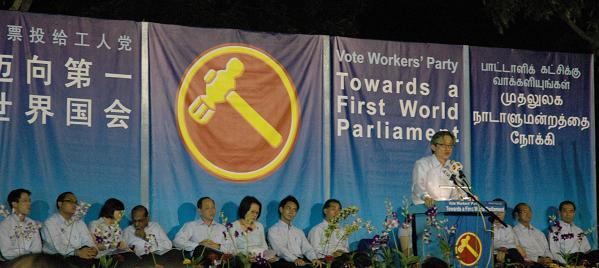
Finally, I hope for significant opposition gains in Singapore. Not because I don’t believe the PAP government has not done truly tremendous things for the country (to which so many brilliant Malaysians have migrated, as recently reported by the World Bank). But, as rallied by the opposition parties, “Towards a First-World Parliament”, it is simply preposterous that Singapore with all its gallant entry in the indexes of the world and as a developed nation has only two out of its 87 parliamentary seats. PAP having 97.7% of Parliament is laughable indeed. Everyone knows checks and balances are required to ensure public accountability, and this is no exception. With social imbalances emerging, people and the government could do the responsible thing of facilitating change rather than keeping it at bay — lest this implodes suddenly without warning.

It was a refreshing experience, and I leave with the knowledge that Singaporeans are not as plastic and stoic as we Malaysians often imagine. They do have a sense of humour, self-criticism, sarcasm and wit, and are willing to shout slogans at sweaty rallies (at least once in five years). “You need to be brave” is the clarion call I heard repeated at both SDP and WP rallies — and interspersed in my conversations with party workers. Bravery. Let’s see how far this goes on Saturday, 7 May 2011.

Posted in Elections, General Politics, Outside Malaysia | Leave a comment

SG Elections: Thoughts After The SDP Rally

SG Elections: Thoughts After The SDP Rally

First posted on LoyarBurok.com on 4th May 2011.

LoyarBurokker and Malaysian election tourist Tricia finds herself in Singapore, ahead of their 16th general elections. She tells us why Singaporeans are saying the elections are different this time around.

Barely a few weeks since the Sarawak state elections at home, another potentially exciting elections beckoned my way. This political tourist found herself on a bus south-bound for Singapore, which will hold its 16th parliamentary general election on Saturday, 7 May 2011. With less than a week to go, the campaigns of all political parties are raring and in full force.

“This elections is different,” is what everyone I speak to has to say. For decades, Singapore has not seen the opposition parties getting themselves as well organised as this, where out of the 87 parliamentary seats, 82 will be contested by opposition candidates. (5 seats are held as a GRC or Group Representative Constituency by the incumbent Minister Mentor Lee Kuan Yew in Tanjong Pagar, and the opposition knew better than to spend scarce resources when up against the Godfather.) 87 seats are crafted into 27 electoral divisions, with 12 Single Member Constituencies and 15 GRCs.

A combination of highly-qualified candidates (an array of fresh faces as new candidates have been unveiled) and well-oiled organisation has resulted in throngs of crowds at the rallies since nomination day four days ago.


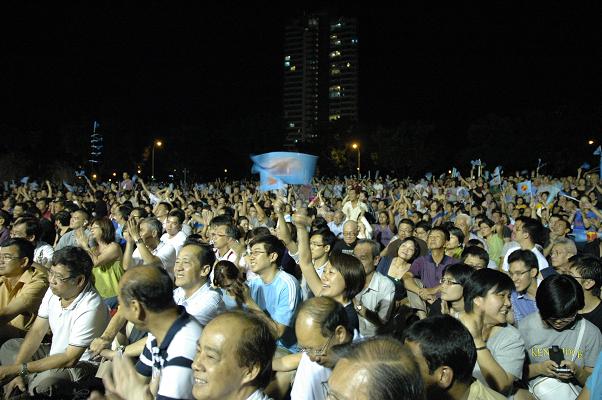
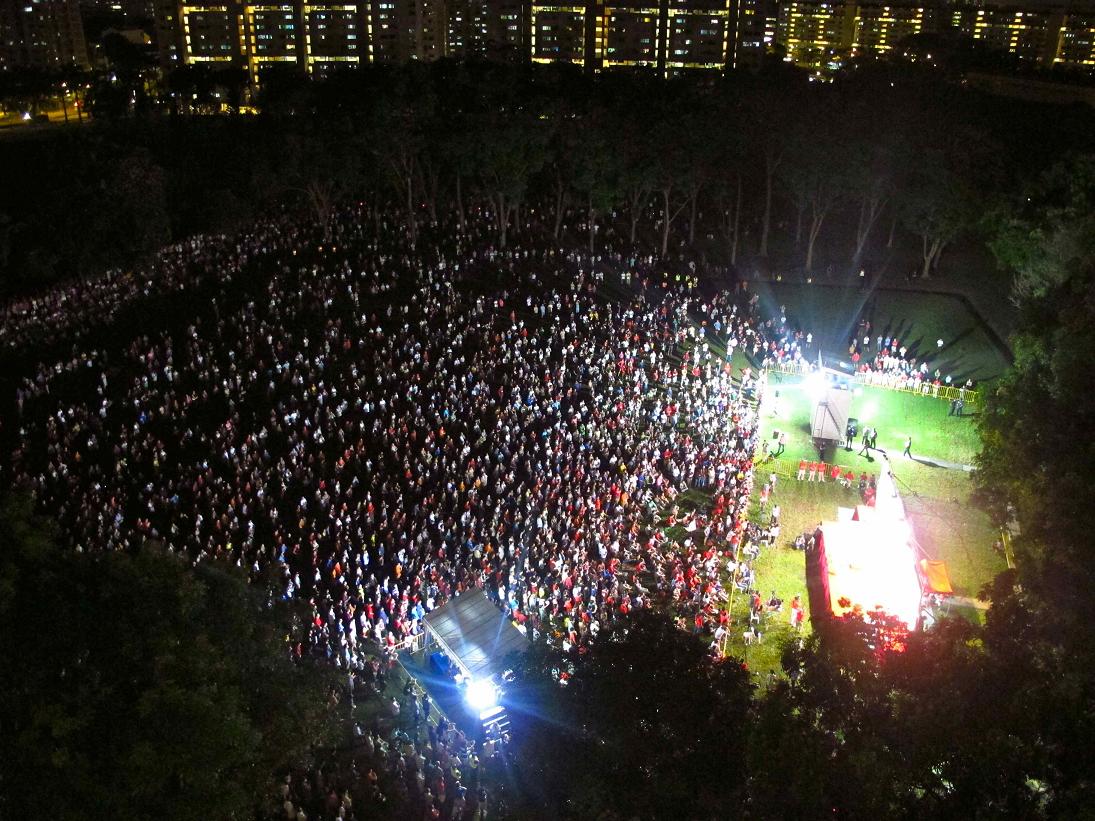
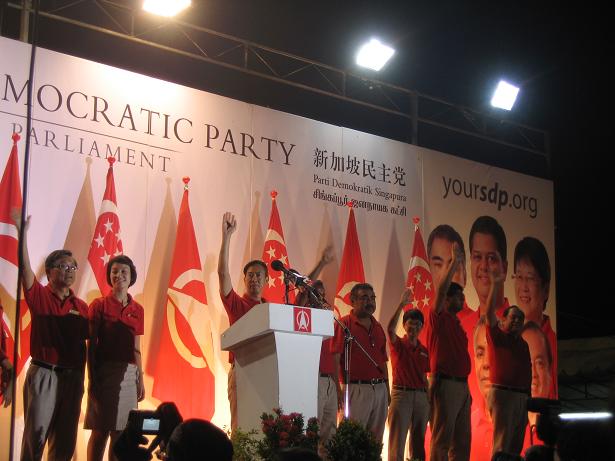
The crowd at the SDP rally. | Photo by Tricia Yeoh

The crowd at the SDP rally. | Photo by Tricia Yeoh

The opposition party heavyweights up against the People’s Action Party (PAP) are the Workers’ Party (WP) and the Singapore Democratic Party (SDP), with other smaller parties such as theNational Solidarity Party (NSP). I chatted with some Junior College and University students, ranging from the age of 17 to 23 and to my pleasant surprise, they say it is a “cool” thing to attend opposition party rallies, although some are still too young to vote. The culture of rally-hopping seems to have spread south, another Malaysian export in addition to our valuable talent.

Tonight I visited my first Singaporean party rally. Held in a Clementi field, in the Holland-Bukit Timah GRC constituency, the SDP successfully drew in a crowd of 10,000 people or so. The energy was unmistakeable, emotions high, extremely responsive to the egging-ons of the speakers, shouts of “SDP! SDP!” and distinctive boos when Senior Minister Goh Chok Tong’s name was mentioned — a rather surprising cynicism of the PAP, which has had previously unwavering support especially amongst the middle to high-income earners of this locality.

The SDP lineup that evening. | Photo by Tricia Yeoh

The SDP lineup that evening. | Photo by Tricia Yeoh

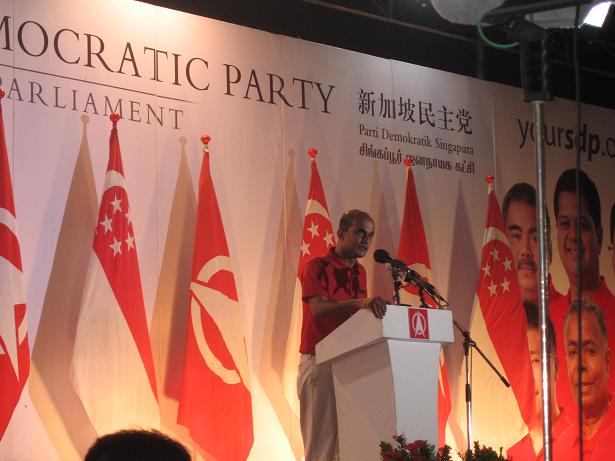
Unfortunately I missed Michelle Lee, candidate for this constituency, but was extremely impressed by the lucidity, flow and intellectual argument behind economist Tan Jee Say and activist Vincent Wijeysingha. The latter seemed particularly loved by the crowd. The fourth candidate for this GRC is psychologist Ang Yong Guan.

A singular theme emerged from the speeches of various individuals on stage, and it is this. That despite the great economic advances of Singapore, the nation has lost its soul. It is the endless, unthinking, 14-hour-day slogging that drives the country to achieve spectacular heights. But, the SDP argues, this cycle is breeding ground for greed and the desperate need for material accumulation without (and this is crucial) the equivalent value of family time, social and community development. If, for example, the government crafted policies in the direction of building families’ quality of life with sufficient time and disposable income, there may not be the over-reliance on foreign labour as is currently the case, which has driven down wages.

It is the psychology of the nation’s well-being that is at stake, they reason. Shall the stomach be full, and the heart and mind left empty? Vincent very articulately stated, “Singaporeans know the price of everything, but the value of nothing.” That the government has placed in the minds of its people to be calculative about everything; that one must vote carefully in order to secure development in one’s estate, and thus this is the poverty of society.

My own trajectory reads: The politics of fear, of insecurity, has driven Singaporeans to chase the wind — or, in chasing the apparent concrete wealth evident in those they see around them, it is the race itself they run after and not the utility from which the goal ought to have derived. They ought also to have brought up the education system, which has trained a highly intelligent but largely conformist electorate. This is speaking in general terms of course, but one cannot deny it is a system that rewards discipline and punishes “weakness” (defined in highly objective terms, in which category any counter-cultural value such as creativity also falls).

This particular constituency was well-educated enough to comprehend this line of thought. An economic “Regeneration Plan” was then discussed, authored by no less than a former Principal Private Secretary to Goh Chok Tong, Tan Jee Say, with detailed proposals on creating jobs and enterprise in a new Singapore. Again, the provision for services sector growth as opposed to manufacturing; the proposal to integrate existing HDB (Housing Development Board) flats with businesses in order to also integrate work and life in a central location with shorter travel time.

Vincent Wijeysingha. | Photo by Tricia Yeoh

Vincent Wijeysingha. | Photo by Tricia Yeoh

However, I must caution that the Malaysian reaction to this may be simply: “You see lah. They progress so much, so fast. Too high growth mah. Malaysia at least we rilek (relax).” No — this is precisely the lesson we must learn. In all our attempts at growing the economy, attracting investments and making quick wins via the Economic Transformation Programme (ETP), we must not forget to cultivate those softer skills that the Singaporean opposition is now criticising they have left out. The arts, cultural, creative, services, historical aspects of life. Has the industrial age not already surpassed us that we still hanker after it so? We must not be quick to criticise that which we are in fact blindly leaping after.

And so, talking about a country with no soul. My mind made quick comparisons with election campaigns in Malaysia (of course), and what a world of difference! Everything was done in too orderly a fashion that I cringed. Much like the clinical, organised environment the world praises Singapore for, so was the political rally. Policemen lined the periphery of the field with orange torches to aid people across drains, all cars were parked in their designated lots, the rally ended promptly at 10pm (as listed on the Police Website), everyone returned home without as much as an extra post-rally squeak.


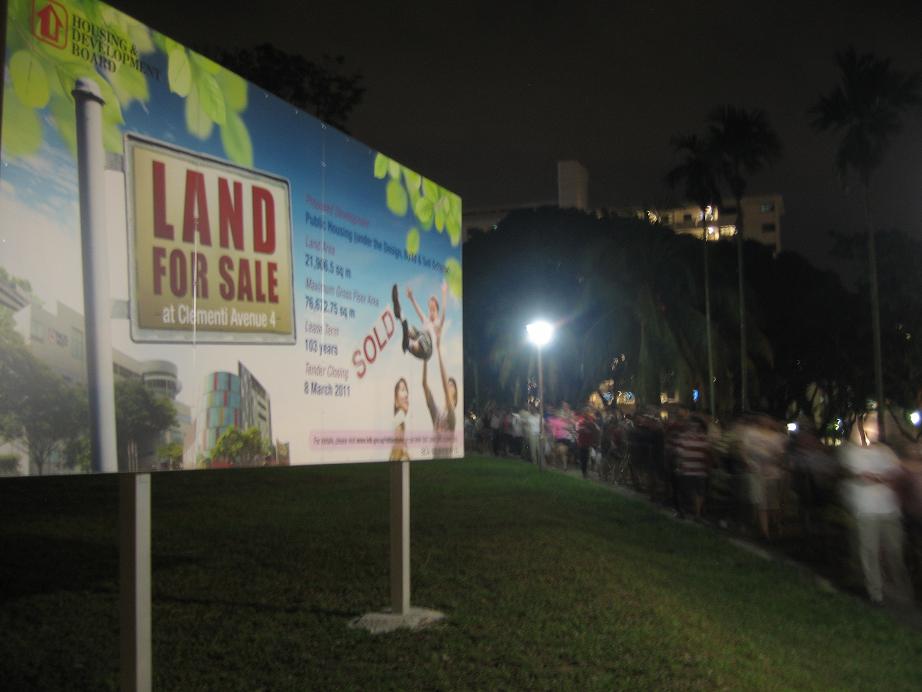
More money to be made? | Photo by Tricia Yeoh

More money to be made? | Photo by Tricia Yeoh

And the most telling of all, as if to add salt to the very injury exposed by the SDP politicians themselves, as the crowd trooped off home (walking on the pavement, mind you, and not a step out upon the soddy field), they passed by a large billboard that read “LAND FOR SALE”. Not a single person passed who did not open their eyes wide in wonder, and ask their companion about this. My error for being presumptuous, but I would not be too far from the truth in projecting their minds went directly to the potential profit one could gain from such a purchase. This confirmed everything the speakers had just touched on, that the Singaporean mind has been trained to place as priority material accumulation above any other value system.

If the turn-out tonight is anything to go by, I am quite sure the PAP is worried. Tomorrow I shall venture to a Workers’ Party rally, hopefully in a more heartland constituency to make comparisons between the two.

Posted in Elections, General Politics, Outside Malaysia | Leave a comment

Of Brain Drain, Ethnicity and Class

There are 1 million Malaysians living abroad, based on the World Bank report published in 2011. This was my piece in May 2011 in theSun, my first column there which I’ve maintained since, writing every fortnight, published every other Friday!

Of Brain Drain, Ethnicity and Class

The Chinese predicament in Malaysia is frankly one of survival. This ought not to have been the case, but it is evident in the various actions and reactions observed over the last several decades. But is this really the way in which Malaysians should continue analysing socio-political and socio-economic trends in the country? Is the ethnic community lens the only reference through which we are able to make sense of the world? Or is it not possible, despite the need to have head knowledge of statistical means within each grouping, to abandon such segmentation in favour of class and income disparities?

The recently concluded Sarawak state elections saw a massive swing of Chinese voters away from the Barisan Nasional member party, the Sarawak United Progressive Party (SUPP), traditionally favoured amongst the ethnic Chinese. Months of hard work paid off for the Pakatan Rakyat’s Democratic Action Party (DAP), who won 12 out of its 15 contested seats. Some of the main issues championed by the DAP and Pakatan Rakyat included corruption of the incumbent Sarawakian leaders, embezzelement of funds, native customary land rights, the incident of Malay Bibles being confiscated due to controversy over use of the word “Allah” therein amongst others.

The immediate reaction of a Malay daily’s editorial to the election results, in which the opposition made in-roads from seven to 16 out of the total of 71 state assembly seats, was to accuse the opposition alliance of intentionally playing the race card, in this case Chinese. It also stated unreservedly that this irresponsibly threatened the social cohesion enjoyed and preserved by the existing national government. Although many were in great uproar over this, others secretly questioned whether this really did reflect a movement towards a two-party system that pits one mono-ethnic group against the other. A serious question to which nobody seems brave enough to confront at this point.

The Draining Brains from Malaysia

As if on clockwork, the World Bank then released a revelationary report on Malaysia’s brain drain, an issue that before this has been skirted around by the government. As many as 1 million Malaysians are living abroad, close to 60 percent of whom are in Singapore, and almost 90 percent of whom are of Chinese ethnic origin. Two out of ten Malaysians with a tertiary degree migrated in 2000 to Singapore and OECD countries, more than twice the world average. To put things into perspective, an estimated 1 million Malaysians live abroad, with a third representing brain drain. 66% of those interviewed cited career prospects as the primary reason for leaving, which is natural and expected, since the global migration phenomenon does dictate movement from developing to developed nations.

WB brain drain 1

 WB brain drain 2

Source of Charts: Malaysian Economic Monitor April 2011, Brain Drain, The World Bank

But the second highest reason cited was that of social injustice. The debate has gone on far too long; that citizens born in a country do not receive equal policy treatment. Economic, education, and corporate policies initiated in the 1970s to alleviate Bumiputera policy have outlived their due course, and instead of their original intentions have permeated into the very raison d’etre of many, creating a cultural revolution in the mind of ethnic supremacy. This sort of psychological dependency is the most difficult to treat.

Ethnic Representation in Government

The Prime Minister’s reactions to all of the above were first, that the brain drain has not unduly affected foreign direct investment into Malaysia, and that in any case, the country depends on 70 percent domestic investment (as if to say FDIs are no longer an important variable in the economic equation). He also called on Pakatan’s member PAS (Pan-Malaysian Islamic Party) to withdraw from the opposition coalition, since the coalition was not able to truly “live up to Islamic ideals”. This seemed like a move to perpetuate the very fears of the people in dividing people according to race and creed – a philosophical principle quite unlike what he espouses in the heady 1Malaysia chant.

Finally, the most disturbing statement, in which he reminded the Chinese to make their political choice clear: to vote for the government (read: support the Chinese party within the Barisan Nasional government, Malaysian Chinese Association, MCA) or give up Chinese representation in government altogether, and along with it any major decision-making powers. MCA itself affirmed it would not seek Cabinet positions were it rejected by the Malaysian Chinese.

This series of events sees the Chinese reacting in very different ways and one must not pretend to comprehend all of them intuitively. But whichever sub-cultural category one falls into, the gut reaction is similar. As citizens of the country, each person of ethnic origin deserves similar treatment. Despite the truth of the saying “every man for himself”, the nation must strive towards ensuring that any person of any race should reasonably defend any Malaysian – simply because it is the right thing to do. Just because there is a Chinese Cabinet member in place, does it mean I can necessarily rely on him to make conscionable decisions that will readily steer the future for my children? No. We should rather seek individuals of conscience, truth, freedom and justice – of any background, to make wise choices for the country.

Representation of All Malaysians 

Having said this, the past is a poor record of colour-blindness. The Chinese have scurried to make one out of two choices: to either play the game, get a share of the cake even if it means sacrificing ideals in order to survive; or recklessly oppose any sort of corrupt practice (of the loosest definition). Simply: work in the system with other well-oiled individuals; or stay out completely and be happy with the scraps that come your way.

But there is an alternative. And that is to slowly but painfully wean ourselves off the addiction to race, which is, after all, a cultural and geographical development in itself. There may be cultural norms that should continue, but as far as national policies and benefits are concerned, let the principles of need and merit flourish. Political and policy analysts must begin their pieces with a primary focus on the socio-economic and income imbalances within communities, as these class variables would be better determinants of present and future trends as opposed to ethnicity alone.

The reaction to the brain drain report should not have been defensive but optimistic. “We are aware of the situation and are putting systems in place that we hope will attract our valued talent back home. We acknowledge and affirm the great things they will contribute to the country, and welcome them home with open arms. Things will be different, starting now!”, is what I would have wanted to hear. Maybe then, our flock in neighbouring Singapore could cross borders again, this time to return home.

Posted in Economics, Ethno-Religious Politics | Leave a comment

The dead have rights, too

My very first column in Selangor Times after I left the Selangor MB’s office, which would spur me on to write the script of my documentary, The Rights of The Dead. This was published in April 2011.

The dead have rights, too

Malaysia is in desperate need of a reliable and trustworthy institute conducting autopsies especially in relation to deaths in custody. Last week, the body of customs officer Ahmad Sarbani was found on the grounds of the Malaysian Anti-Corruption Commission (MACC) Federal Territory office. The incident was tragic, but it seemed absolutely ridiculous as this is the second time in three years that a body was found under similar circumstances: Interrogation by the MACC, then death from (apparent) fall from height.

You couldn’t make this stuff up even if you wanted to. This brings to mind Shakespeare’s “There is something rotten in the state of Denmark”. Political intrigue, possible cover-ups, and a series of mysterious deaths in the state of Malaysia, perhaps?

Deaths in Custody

It is reported that since 2000, at least 147 people died in police custody. Although it is difficult to extract data on the actual number of deaths a year (as official statistics provide varying figures for varying periods of time), it is noted that there were 150 deaths from 1990 till 2004 (10.7 per year), which has increased to 85 deaths between 2003 and 2007 (21.25 per year). (Hector, Aliran, November 2010).

Some of the ones we may recall are: January 2008, a police constable was charged with causing hurt to extract a confession from A Kugan, 22, who died in police custody. In July of the same year, P Gunasegaram, 31, was found dead in the Sentul police station. In 2010, sawmill worker P Bapu, 28, was found dead in the Jempol police station.

The statistics cited above may not even include deaths “outside” the lock-up, for instance, at detention centres due to illnesses or negligence. And they definitely do not include freak incidents such as of Teoh Beng Hock (July 2010), and Ahmad Sarbani (April 2011) who both fell from a height at MACC offices (Selangor and Federal Territories, respectively).

One thing that ties all these deaths together, though, is that the immediate reaction from the authorities was to claim at first instance these were suicide cases. It is almost like a predictive tool that whenever a death in custody (or now, under interrogation) occurs, authorities will allude to suicide, the family calls for a second independent autopsy, and the government forms an enquiry into the matter. This has become practically SOP by now: Standard Operating Procedure.

Autopsies in Malaysia

What this really highlights is the growing distrust of Malaysians towards an official line taken on the causes of death. In Malaysia, all autopsies are conducted entirely by forensic pathologists representing the government.

There is a list of criteria required to qualify one as a “Forensic Pathologist” under the National Specialist Register (NSR) that must eventually be approved by the Forensic Pathologist Specialty Committee. For instance, medical degrees have to be recognised by the Malaysian Medical Council, and postgraduate degrees in Forensic Pathology recognised by the Malaysian government. There are other detailed requirements that can be found on the NSR website but as a general rule, all medical practitioners who practise in the country have to be registered with the Malaysian Medical Council, and those working in government hospitals and healthcare facilities must be gazetted by the Ministry of Health.

Even in the cases where a second autopsy took place, this needed to be conducted by a pathologist approved by the government. For example, Teoh’s second autopsy was carried out by Dr. Shahidan Md Noor from the Sungai Buloh Hospital, representing the government of Malaysia, although the government was gracious enough to allow foreign pathologists present as observers.

What Shall We Do?

Malaysians were taken by surprise at the flamboyant Dr. Porntip Rojanasunan who represented the Selangor government in the Teoh case. She is Director General of the Central Institute of Forensic Science (CIFS) at the Thai Ministry of Justice. Very public about her stand-offs with the Thai Police, she is still given the independence to carry out the work at the CIFS despite these occasional disagreements. This is perhaps because her team is considered a pioneer in many new methods including setting up a DNA database for local authorities in the south of Thailand, actually assisting the police in their work on identifying terrorists.

Human rights activists have long called for the Malaysian government to act immediately to (in Dr. Porntip’s words) work for the “rights of the dead”. These include urging the government to ratify the United Nations Convention Against Torture, and form an Independent Police Complaints and Misconduct Commission. The Malaysian Bar has most recently called on the government to introduce a Coroner’s Act and establish a Coroner’s Court, and “to conduct a comprehensive review of the manner in which inquiries into deaths are undertaken”.

One more thing to add to this list. Autopsies conducted by the government and their conclusions which follow after are increasingly seen to be biased. Is it time to think of independent autopsies from an institute that Malaysians can grow to trust? After all, you and I have every right to demand a system of justice we have absolute faith in, a system of justice to protect us in the time we most need it.

Posted in Personal, Reflections, Selangor, The Cause | 1 Comment

The many sides of good city living

Whoever wins the election will have to deal with the increasing problems of urbanisation, public transport, expensive housing and the cost of living. First published in Penang Monthly in April 2011.

The many sides of good city living

Not only are cities becoming the centre of developmental attention, their growing importance is challenging how we look at global societies. The national economy depends on the health of its cities. And that health is multifaceted.

One out of two people in the world already lives in a city today. In 40 years, seven out of 10 will be doing that. Rapid urbanisation around the world has put to past the notion that cities would become sprawling (like many American towns); instead experts now recognise that people are moving towards cities to both live and work, at a rapid rate.

What’s fascinating is that cities will soon become more important than nation-states, where the competition for global talent will be better expressed, for example, a case of Vancouver vs. Seattle, as opposed to Canada vs. the US; or Bangkok vs. Kuala Lumpur, and not Thailand vs. Malaysia.

The challenge for city leaders around the world is to therefore develop four crucial components for sustainability, namely cities must be inclusive, competitive, liveable and cultural.

A Global City 2011 conference I attended recently in Abu Dhabi was themed “City Identity and Values”. What was noteworthy from it was the insight among policy makers and economists that sustainability must not be evaluated purely from economic or environmental perspectives. Other equally important pillars are financial (whether or not city plans have reasonable funding in the long run without overburdening tax-payers), social (how society integrates internal and external migrants of varying backgrounds, and consequences on socio-economic status) and cultural (where cities need to strongly emphasise the development of arts and culture, which actually contributes to economic growth through the building of communities).

City planning

At the conference, Abu Dhabi itself was proud to showcase its massive plans for the next decade. It has a dynamic team within its urban planning council – young, multinational and multicultural, reflective of the very city it wishes to build. In its own words, the immense amount of time expended on the planning process is well worth it – something Malaysian urban centres ought to be subject to, especially as it goes through its current wave of economic transformation.

The large mega-projects slated under the Economic Transformation Programme are based mainly within the Klang Valley, or what is termed Greater Kuala Lumpur these days, which include the Mass Rapid Transit (MRT) project, the development of a new township of more than 2,000 acres of land currently owned by the Rubber Research Institute, and the “River of Life” Klang River cleaning and development project.

However, while the Abu Dhabi Urban Planning Council has a very clear idea of what its city’s identity and values are (inclusive, diverse, Islamic but open, vibrant, cultural), this is missing in Kuala Lumpur, where much of the city-planning and development are outsourced to the private sector whose vision may not necessarily coincide with the more social-oriented concerns local leaders ought to strive towards. In planning for our cities, where are we in articulating the sort of identities and values that we desire to be in place? How differently do we want, for example, to position the cities of Kuala Lumpur, Petaling Jaya, George Town, Johor Bahru, and so on? Have there been sufficient breadth and depth dedicated to charting out a roadmap and blueprint for all aspects of these cities of the future?

In Malaysia

Between 1970 and 2006, the proportion of population living in big cities doubled due to rapid urbanisation mainly contributed to by internal migration. Internal migration in Malaysia is gender, age and area selective, “dominated by males mainly in the age group of 15 to 34 years” (Permanent Mission of Malaysia to the United Nations, 2008), though female migration is expected to increase in the future. In 1980, urbanisation was at a 34.2% rate, reaching 61.8% in 2000 and 65% in 2008. This is expected to increase to 85% by 2050. The government did put together a National Urbanisation Policy in 2006, and of course there exists a whole host of other well-meaning plans such as the National Physical Plan 2005 and Five-Year Malaysia Plans, State Structural Plans and so on.

However, each city is unique unto itself. Whilst it is important for those plans to provide the over-arching national vision, the cities must have visionary policymakers and thinkers able to give each its respective identity, brand and positioning – pretty much like selling a product to a targeted audience.

The two Pakatan Rakyat-led city-states in Penang and Selangor, for example, are very different and must therefore be handled differently. Between 1991 and 2000, Penang’s population grew at an annual 2.37%, and more rapidly at 3.05% up to 2010. It is estimated that by 2020, Penang’s population will have grown to 2.36 million due to internal migration, concentrated most densely on Penang Island, with 60% converged at George Town. Selangor’s population has grown on an average of 2.4%, totalling almost five million now and is estimated to hit 7.3 million by 2020. Selangor’s population is most dense in the districts of Petaling, Hulu Langat and Klang.

Penang has had the unique edge of having its city George Town declared a Unesco World Heritage Site, which in turn has been a catalyst for city transformation through a multitude of stakeholders. It has successfully painted itself as a cosmopolitan city of heritage, culinary delights, culture and history. Urban rejuvenation efforts over the last three years have paid off here, with The Edge magazine’s Options section featuring Penang in glowing terms in January 2011.

Selangor, whose original capital of Kuala Lumpur was carved out for mainly political and electoral reasons in 1974, is the most urbanised state in the country. Residents of the Klang Valley tend to think of the “city” as Kuala Lumpur, whilst they return to their suburban homes in the rest of Selangor. This in some way has struck a poser for Selangor to develop its own unique city, being already in such close proximity to its down-the-highway neighbour, Kuala Lumpur. The capital city of Selangor, Shah Alam, has not experienced over the last few decades the kind of development that a capital ought to have. By definition, Petaling Jaya is the other official city, and although the others are still labelled towns, by sheer population size Klang, Subang Jaya and Kajang ought to also be considered cities. All these areas, though within Selangor, are themselves greatly varying in character, size, demography, ethnic makeup and culture.

Petaling Jaya with its PJ Elevated City and other rejuvenation projects in store within the older sections; along with Ampang Jaya and selected development sites related to the Klang River rehabilitation project will be two areas to look out for. However, the more important task of crafting an image, identity, brand and culture for these individual cities will be required.

In the area of urban revitalisation and rejuvenation, some bi-partisanship has been experienced despite political enmity between the federal and Pakatan Rakyat state governments. In Penang, Khazanah Nasional and its special purpose vehicle Think City Sdn Bhd, have worked with the Penang state government through funding and coordination in developing George Town.

In Selangor, the Greater Kuala Lumpur/Klang Valley plan will benefit Selangor in certain respects (funding of redeveloping sewerage pipes, rehabilitation of river areas and so on). However, being Pakatan Rakyat-led state governments means they must play the role of watchdogs in ensuring that these projects are conducted with full transparency, public accountability and good governance. It remains to be seen how effective this role can be played in actual project implementation.

Diversity in cities

One of the key themes at the Abu Dhabi conference was the diversity in cities. The most successful and attractive cities of today also happen to be the most diverse. Studies have shown that cities which feature the most ethnically diverse communities are also the cities that attract the most talent, resulting in the greatest innovations and fastest economic growth. In the US, research proved that the city with these elements was San Francisco where more than a third of its residents were born outside the US. This city also houses Silicon Valley, the ultimate city of talent, innovation and modern technology driving the tools such as Google, which are daily necessities for many.

There are 214 million international migrants worldwide, 128 million of whom are living in developed countries. However, the number of international migrants in developing countries has risen more rapidly recently, by eight million in 2005–2010 compared to four million in 2000–2005. But interestingly, 740 million people are internal migrants, people moving within their countries from one city to another. Countries are therefore forced to formulate policies that deal with the situation of an increasingly heterogeneous society since they ultimately impact upon social structures.

Malaysia, for example, is home to at least three million migrants, both documented and undocumented.  As of 2006, we had 32,000 expatriates and 1,728 migrants under a unique programme called “Malaysia My Second Home” for foreigners to stay in the country with a multiple entry visa. The bulk of our migrants therefore lies in the 1.9 million unskilled and semi-skilled workers from 23 countries, with Indonesia and Nepal as the top sending countries. Malaysia also has about 50,000 to 60,000 foreign students.

Although all countries compete for the most talented, the truth is, without the unskilled and semi-skilled migrant labour in Malaysia, we would not be able to generate the six per cent growth per annum our government is projecting to hit over the next 10 years. They contribute to the traditional construction, manufacturing sectors of the economy. And increasingly, in order to maximise economic value, the country hopes that the services sector will contribute at least 60%–70% of the economy. Foreign labour will be contributing to this vibrant services sector. It is a daunting thought that cities of the world are clamouring to be the best, most attractive and competitive, as this means time is short for Malaysian cities. However, as we rush ahead, we must be cognisant that sustainability and diversity are key.

Posted in Economics, Public Administration, Selangor | Leave a comment