Islamic Banking

Al Rajhi Bank was officially launched in Malaysia yesterday. It has 15 branches open now and is planning a whole lot more this year. Yes, already we see its trademark deep peacock blue knocking at our doorsteps through big banners claiming “Just Values” all around LRT pillars, and the branches themselves popping up like nobody’s business in the Klang Valley.

Islamic Banking. That’s something I haven’t actually thought through very thoroughly indeed. If you think about it, its values and principles are based on those that have built up the monotheistic religions of today. Some questions to think about, before I give my approval rating for the GREAT emphasis Malaysia has been placing upon Islamic banking recently. Just check out newspapers today and you’ll realise that this is the “next big thing” for Malaysia. Tan Sri Zeti certainly has her hands full trying to implement it all: A Malaysia that is a central Islamic hub.

Can citizens in Malaysia, who are not Muslim, affirm Islamic banking? Can they subscribe to it in principle, not just because it makes good economic sense and brings in the dough? I suppose this warrants the larger question of whether non-Muslim Malaysians can adhere to general Islamic values? My personal answer is yes, if it sticks to what it preaches. However we are not fooled into thinking this is the reality.

But one thing at a time. Islamic Banking. Think about it. If non-Muslims can subscribe to these values, because they are… as Al Rajhi puts it so succinctly, “Just Values”, then perhaps this is the stepping stone we’ve all been waiting for to bring people together. Just a tiny weeny step closer.

The majority of these principles are based on simple morality and common sense, which form the bases of many religions, including Islam. The Islamic financial system employs the concept of participation in the enterprise, utilizing the funds at risk on a profit-and- loss-sharing basis. This by no means implies that investments with financial institutions are necessarily speculative. This can be excluded by careful investment policy, diversification of risk and prudent management by Islamic financial institutions.

Posted in Religion | Leave a comment

Welcome to Blog World

Welcome to Blog World, no holds barred. We have to be willing to accept and embrace the very thing we call for: Openness and Freedom of Speech.

Welcome to Blog World, where people can make any such statement about anyone and lo and behold, the herd mentality rules. People believe the unbelievable.

Today’s article in the Sun – featured quite prominently, thanks to their fearless editors – click here.

And the same article published on Malaysia-Today here, with loads of comments – you pick and choose what to believe. After all, aren’t we a birthing nation of mature citizens?

We might just have to believe so. (Read: herd mentality)

Posted in Uncategorized | Leave a comment

Bookie Haven

Amidst some of my heavier reading material I’ve had to sift through, in the past month I managed to sneak in some private reading of my own. Here’s a quick sample of what I’ve been digesting:

The Tipping Point

An inspiring book in which Malcolm Gladwell talks about how ideas and trends are like epidemics. Think about how influenza spreads. Think about how some seemingly unheard of brand becomes instantaneously popular. What is it that tips the market trend, and causes it to spread like wildfire amongst a crowd? Gladwell says it’s due to a number of factors like having a “Connector” – people who are influential in various different circles, a “Sticky Factor” – factors that allow ideas to stick to people’s heads, and “the Power of Context” – the right conditions. These are common sense notions, but written in the right marketing jargon for the man on the street (like me, or woman in my case) to digest. The application for me, of course, is to see how I can continue to spew out ideas for change and market it for the Malaysian public. What is the method by which I can influence the most number of people in the most effective manner? This book may help to answer that question.

On Beauty

This was simply absorbed as an amazing literary read; the kind you can slouch on your bed over, on a lazy Sunday afternoon. This is Zadie Smith’s third book, her first being “White Teeth” which is also a great read. On Beauty took the crown, though. Smith has a powerful way of drawing out such depth in the life of her characters, building up the storyline slowly to a climax – and you can hardly breathe in the last chapters, emphathising completely with each of their lives and experiences. It’s a book that makes you think about Love, what it Costs, why it Falls Apart, and whether it’s all worth it. Marriage, separation, affairs, getting too used to being with Someone, humanity, people being who they are and realising that hey, it’s alright to fall down in life. Love cuts deep but you wake up and say, thanks for the pain – I learnt something there I wouldn’t have otherwise.

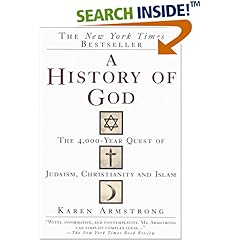
A History of God

Currently reading: A History of God by Karen Armstrong. Review to come up soon, but the introduction has been enlightening already. Wonder how this will coincide with my current study of Theology.

Posted in Reflections | 4 Comments

Malaysia’s Secret Garden

Welcome to Malaysia’s Secret Garden. The well kept, well tended garden, at that. Wonder what lies beneath the rosy bushes and piles of dried leaves. What are the borders to these lovely beauties? Some Acts and Laws, perhaps, that maintain strict boundaries?

A really good article on Human Rights in Malaysia here, by lawyer Tommy Thomas, while I was surfing around. Here is another good article by the United Nations’ Economic & Social Rights Council, special report on Malaysia.

A brief introduction for those who don’t already know:

  1. Malaysia is still under the state of “Emergency”, which means it can invoke laws pertaining to “ensuring national security” anytime it wants.
  2. The Acts that are commonly used against citizens when they want to speak up are the ISA, OSA, PPPA:

Internal Security Act:

The most pernicious legislation is the Internal Security Act (“ISA”) which gives sweeping powers to the Executive, (the police and the Minister of Home Affairs) to arrest and detain any person for a period of 60 days; thereafter the Minister can order that person to remain in detention for a further two years, which detention can be renewed indefinitely every two years. Preventive detention is terribly insidious because a person’s liberty is deprived without trial. Other extraordinary powers extend to prohibiting meetings and banning publications, books and periodicals.

Official Secrets Act:

The OSA proscribes the collection, possession, or distribution directly or indirectly to a foreign country of official information.

Any public officer can declare any document or other piece of information an official secret, a certification that cannot be questioned in court. The OSA carries a mandatory one year to seven years’ imprisonment.

Printing Presses and Publications Act:

The Printing Presses and Publications Act contains numerous restrictions on the publication of newspapers and periodicals, including the requirement for an annual licence which may be revoked by the Minister at any time.

Finally, some quarters have been calling for a Freedom of Information Act – primarily driven by CIJ (Centre for Independent Journalism), and being echoed by others. Here is a really good article on WHY Freedom of Information is so important! It makes really good sense, and it’s a surprise that Malaysia hasn’t taken heed of its call yet. (Actually, not so much of a surprise really, and plus the Rakyat aren’t all that awake to push the government. So why bother, right?)

Posted in The Cause | Leave a comment

Total Truth

We had the first discussion of Nancy Pearcey’s book Total Truth, which questions the way in which Christianity operates, some themes overlapping very much with Brian McLaren’s thought processes.

Here she criticises the private-public split in the way religions work.

In Total Truth, Nancy Pearcey offers a razor-sharp analysis of the public/private split, explaining how it hamstrings our efforts at both personal and cultural renewal. Ultimately it reflects a division in the concept of truth itself, which functions as a gatekeeper, ruling Christian principles out of bounds in the public arena.

How can we unify our fragmented lives and recover spiritual power? With examples from the lives of real people, past and present, Pearcey teaches readers how to liberate Christianity from its cultural captivity. She walks readers through practical, hands-on steps for crafting a full-orbed Christian worldview.

But this brings some things into question. Even before we start discussing the book…

  1. Do we believe that Christianity is the total truth?
  2. What is “Christianity”? Since within the “church” there are so many variations of what is the minimum that can be acceptable as Christian and not. Interpretations of fundamental beliefs, if varied – can these be considered as Christian? Or are we talking about the general Christian faith as it were? What is this general faith?
  3. Upon agreeing what Christianity is and is not, its boundaries, only then can we begin discussing.

Some of the things which have challenged me recently are:

  • What is the meaning of “belief”?
  • What is the meaning of “truth”?
  • What is the meaning of “salvation”?
  • What is the meaning of “Jesus”?

I have recently found my answers to vary violently from the conventional versions that I have been taught my whole life. If this is true, then my interpretation of the world changes significantly. Only then can I begin talking about how to integrate my faith into my work vocation and life as a whole. Only then can I truly appreciate that God has called all of His humanity into His purpose and kingdom.

Posted in Personal, Religion | 4 Comments

Shhhh.. all a secret

Four opposition leaders are going to be called in tomorrow morning, accused of revealing documents that are classified under the Official Secrets Act, namely documents showing toll concessionaires would profiteer.

What is the purpose of the OSA? To classify documents that will be a cause of national security and division amongst the people. To maintain order in society, sometimes keeping documents secret from the public is understandable. BUT, when documents are kept secret to the detriment of the people and public, this is utterly unacceptable.

Deliberately hiding behind some official law is not only an escapist tactic, it is also shamefully immature. It doesn’t reflect a government that is ready to bring things out into the open to discuss and have a useful exchange. If this is the case, might as well not release any information or statistics to the public at all, because people realise that it is selective in nature.

I guess it seems that only certain quarters are able to interpret and decide what is considered “sensitive”. It’s definitely not a process well thought-through, with consultation of the public in mind.

Posted in Uncategorized | Leave a comment

Friends in Conversation

I’ve had the privilege of reading through, in the last few months, excerpts of this amazing guy’s mind. His name is Brian McLaren, from the States – and has given Christianity a whole new meaning. He has cynically criticised the American model of Christianity, saying many of the things I myself have long thought. That the evangelical model the modern church is so used to, is very much a shallow and unthinking process. One that has reduced the greatness of a relationship to Steps 1, 2, 3: Believe in Jesus and you will be saved!! There’s your passport to heaven! And conveniently forget about everything else on earth.

One of the ways we can get this discussion going in Malaysia (and many of us have started already) is to come for an upcoming event on the 3rd-4th March 2007, when Brian McLaren himself will be coming to town. Check it out here.

Emergent Malaysia is the main host of the event, you can read more of the works, writings, thoughts and ideas here.

More to come soon..

Posted in Religion | 11 Comments

The Right To Know!

I wrote an article in The Rocket. Made sure I put in the necessary disclaimers, which I guess I should put here as well… 🙂 The author works for a public policy research centre. The views expressed are her own. Very much so!

Read on…..

The Right To Know

A culture of secrecy was evident and characteristic of the Soviet regime, a catalyst which led to the rapid downfall of one of the most powerful agencies of its time. Information was scarce and fiercely held within top ranks; threats were duly given to those who dared question official figures; government activities were closed to public scrutiny. The nameless, faceless masses were slowly but surely coerced into silence, forced to accept official statements despite obvious discrepancies. Needless to say, Russia suffered its consequences and until today has not recovered its economic and political glory of days past.  

We in Malaysia are fortunate to have not lived through the Communist era. We are blessed with an administrative system that recognizes relative openness. The responsibility of us within civil society, however, is to be alert and ever watchful for signs that indicate we are walking down the opposite path.   Continue reading

Posted in The Cause | Leave a comment

Rebel’s Heart for Social Justice

Hello, world. It’s been a deep slumber and she is reawakening. Things have been bubbling and hopefully bursting forth with some good results soon.

First off is a book project by a bunch of enthusiasts initiated by the Agora people, on a book written for young Malaysian Christians.

I’ve been asked to pen the chapter on social justice. Here’s what I have as a very rough outline – feel free to add and comment as you see fit.

1. Churchianity: The ‘Church’ as we see it today

A brief outline on the way church is being run today, largely introspective and insular, emphasising particularly the evangelical model of running Christianity. Save the soul and leave the body to rot sort of Christianity that focuses upon ensuring each damned soul needs to merely acquire a passport into heaven. There will be an emphasis on how the modern church has defined Salvation, as opposed to a more holistic salvation (the Eastern orthodox church defines salvation as becoming the person who God intends us to be, which captures the whole person sort of salvation – body, soul and spirit).

2. Life of Christ, not just His death!

Because the church places emphasis on salvation of the soul alone, it is Jesus’ death that has been the focus. Redemption from sin, eternal life in heaven, a place by God’s throne that He prepares for us way in advance – we are all too familiar with these anecdotes from Sunday school to sunday morning sermons. While these are important and crucial concepts in understanding the Christian faith, few people realise that it is through Jesus’ life itself that attracted the crowds to Him. If truth is indeed in the form of a person, and Jesus is this person, then what was it about His life that we as the church should learn from and emulate? I’ll talk about the relationality of Jesus in His ministry to the people… maybe bring in some concept of the Trinity and how that itself forms a good model in interpreting relationships.

3. Kingdom Principles

I’ll have a lot to say in this part of the chapter. I’ll start off by saying that the whole point of Jesus coming was to restore relationships between those that had been frissured at the Fall, meaning to reconcile man-and-man, man-and-God, man-and-nature. What is relevant in this chapter is man-and-man. Basically, redeeming broken and lost relationships between one and the other. In the perfecting of humankind in the “here and now”, this leads to practicing of “kingdom principles” in the here and now! What sort of principles did Jesus live by? Principles of justice, speaking up for the poor and marginalised in society, the downtrodden, the voiceless, honesty, integrity, humility. And I’ll say this was historical in nature too – the kingdom principles of God did not just start with Jesus – it has transcended the ages, all the way back in the Old Testament especially in the minor prophets of Amos and so on, which clearly expounds on God’s principles in valueing the marginalised in society. God used a lot more examples to judge people because they oppressed the weak, then He did on anything else in some of these books. Will give some quotes and examples here.

4. Doing Justice for Malaysia

And then of course there will be the examples that should be practiced in Malaysia. There’s a lot to say here as well. Will give examples one by one on the areas which we should be lending our ears, hands and heart to.

Posted in The Cause, Theology | 1 Comment

Holiday Material

Holiday material for digestion this season:

1. Gubra – Sequel to Yasmin Ahmad’s Sepet. In the continuation of the fiesty Orked’s life, she discovers her husband is having an affair. She meets up with the brother of Chinese ex-boyfriend and eventually turns to him for comfort. Parallel story runs, of an imam who lives next to a prostitute’s home. Controversial scenes include the imam touching the dog, a butt-naked man in hospital. Movie explores inter-racial relationships in the Malaysian context. Excellent movie, highly recommended. Gubra means anxiety.

2. The Message – Made in 1976, Anthony Quinn stars in the movie which depicts the rising of Islam in Mekkah and Madina. Interesting way of presenting Muhammad’s story, something more people should watch to get a clearer picture of what Islam was in its original form and essence.

3. World on Fire – book by Amy Chua, Yale Law professor. Exploring her thesis of how exporting free market democracy around the world has actually resulted in ethnic conflict. This is because in most cases, globalisation and free markets have benefitted only the ethnic minority in developing countries, making them the economically powerful group. For example, although the Chinese represent between 1-5% of the population in Burma and Philippines, they own up to 60-70% of the economy. The book argues that the Western term of globalisation and free market democracy has not translated into the same meaning in the developing world. Extremely interesting, and something that chimes with my heart. I read Friedman’s books and articles and something seemed to be missing. Amy Chua’s explanations seem to fit perfectly into the abysmal gap that economists tend to ignore. Highly recommended as well.

Posted in Reflections | 5 Comments