
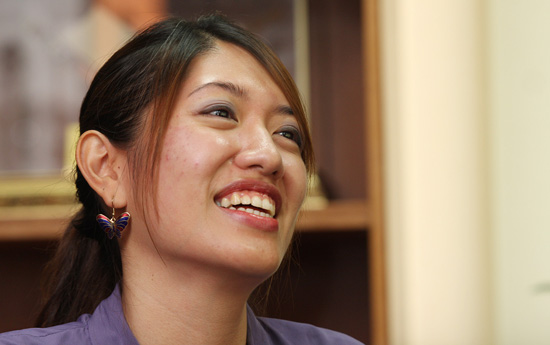
I was invited last Friday to speak at an event jointly organised by Empower and SIRD (Strategic Information and Research Development Centre) entitled “I am what I believe”. A rather intriguing topic to begin with, the objective of the forum was to bring a diverse range of youth together to discuss the role of religion in politics and the fine workings between the two. The speakers represented the fields of law (Aston Pava from the Bar Council), feminist activism (Nazreen Nizam from Sisters in Islam), social and community work (Mrithula Shiva from the URI, United Religions Initiative), and public policy (myself).
Though I did not have a text, I was asked to prepare a summary of what I wrote for the purposes of their record-keeping and report. So here we go. A rough outline of what I said last Friday evening at MBPJ, with about 30-odd young people sacrificing their night out to have some solid discussion on the religious-political sphere in Malaysia.
The Relationship between Faith and Politics
Tonight I will speak on two over-arching topics in relation to faith and politics; the first will outline my personal background and the reasons for which I subscribe to the principles I believe in today, and thereafter I will try to address the problems that are currently being faced in Malaysia.
I’d like to firstly put a caveat that I am not speaking on behalf of the state government. However, because I do wear that particular hat, I do have a certain amount of experience and exposure in the realm of policy-making from a state government’s point of view. Hence, I speak as a policy analyst, one with experience in government, and one who happens to have been brought up in the tradition of the Christian faith.
My heritage is therefore one of Christian tradition. Having grown up in an environment of relative conservative spirituality, the ‘church’ had us believe that much of what constitutes Christianity is essentially to do with one’s spiritual health – the relationship between self and God, the divine. Most of our teachings were centred upon how to improve one’s spirituality, with a particular focus on the afterlife. However, as I started becoming exposed to public issues such as corruption, injustice, cost overruns (such as the Istana we are now faced with), abuse of power, discrimination of minorities and a host of other issues, I realised that the public-private divide was a myth, for someone whose faith so fundamentally describes the personhood of someone.
Again, I am only speaking based on my own experience. The division between the public and private spheres in this instance was difficult, especially since the ethos that drove me as a person – those very principles of justice, honesty, truth, accountability – were the same things that I would project onto the public sphere. Faith and politics were hence intimately intertwined insofar as social justice was concerned. For example, the efforts to fight slavery in the past stemmed precisely from faith principles (or the interpretation of what those religious principles were to that particular group of advocates).
My premise is therefore that for those whose faiths so intensely drive their being, it is not possible to extricate one from the other. The problem arises, however, when there are varying interpretations of opinions on public morality; or when policymakers begin to take it upon themselves to consciously legislate public morality. This, again, is entirely possible, if and only if, the leader concerned is able to rationally consider what is the greater good for all. This means that policy decisions must be made for ALL from different backgrounds, and these differences must be taken into consideration.
Living in Southeast Asia and Asia, for example, it is inevitable that any of us would have had some sort of exposure to religion growing up and even at present. To say strictly that there IS a separation of the two is utopian for some but impractical for most. Given this reality, how then do we approach decision-making for the public at large?
Let’s focus on Malaysia right now. The problem in our country is that there is a tight and interrelated nexus between the issues of race, religion and politics. Race and religion so fundamentally describe identity. The nexus is therefore between identity and faith, identity and power, which are extremely strong ties. Without delving too deeply into history, the Iranian Revolution in 1979 without a doubt spurred Muslims in Malaysia towards a religious wave. Again, this is too sweeping a generalisation and I am not doing justice to historical political discourse, but what resulted from these trends were the emergence of political parties in a race towards being more Islamic than the other: UMNO and PAS. I do not doubt the genuine intentions of many, but there have certainly been strategic steps taken for political expediency purposes, on both sides. Therefore this establishes that religion in Malaysia ties too closely with politics for us to have a rational discussion on the theoretical relationship between faith and politics – or rather, the prescriptive notion of what ought to be in place.
In addressing the issue of a secular vs. an Islamic state, I believe the definition of the term secular or secularisation is interpreted differently by different quarters, and therein lies the difficulty of discourse. A secular state does not necessarily mean one that is completely non-religious. This just means that the country is not legally defined or shaped or dictated by those religious principles, for example as mentioned above the legislating of public morality. In any case, even without those legal tags that we place upon Malaysia, can we not be satisfied to say that the country is in fact Muslim in ethos nevertheless?
The more interesting question to me, therefore, is then to what extent can personal beliefs inform our policy decisions? Should they at all? In the courts, through government administration? I believe that faith can inform and influence our decisions, but only to the extent that it benefits the greater good for all. The important consideration is that of people of multiple religions being affected as a result of any public policy decision.
And yet, more and more issues besiege us daily. There are the issues of the “Allah” controversy, temple relocation, church-burning, Kartika and caning as a result of alcohol consumption, apostasy and the list continues. My personal conviction is that we ought to ask ourselves where we are at the cross-roads, where we want to go and how is it we are to get there? We must be able to work on faith principles and common values that can be applied to the public sphere. I can think offhand of initiatives such as working on poverty, the right to water, refugee issues, humanitarian aid, and so on. There is a need to recognise common ground, that of respect, dignity, trust. The Common Word Document that was sent by leading Muslims around the world to the Church community was an epitome of such respect for a common belief in one God and that of loving thy neighbour.
This work has to begin with the young, as I believe some would be too encumbered with baggage of their own beliefs and that of their heritages (including that within the Christian faith) to progress further. More people of such thought projections should be empowered to speak up and express their opinions, without the religious agenda being hijacked by a select few. More avenues must be given, such that religious views are not exclusive to those who are legally or administratively given the right to speak or define one’s personal beliefs. We must be able to break free from the insecurities, fears of identity that have burdened our own communities for far too long.
What are the right avenues to work on this agenda? Through profession (the vocation that one chooses to take up i.e. law, policy), involvement in civil society (NGOs like Perkasa are powerful but to speak up means forming and joining other NGOs to have a critical mass and show voice and power), politics (being involved in actual decision-making or supporting those in politics who share your views), the media and Internet (Web 3.0 is powerful as a source of influencing opinions far and wide). Ultimately, it’s about education and opening of the mind. Remember this. Leaders make decisions based on what they believe the people want. Enough people believing and displaying publicly that they desire traditional, classical religion to be less defined within the law, will eventually lead the way to that end. This, after all, is democracy.

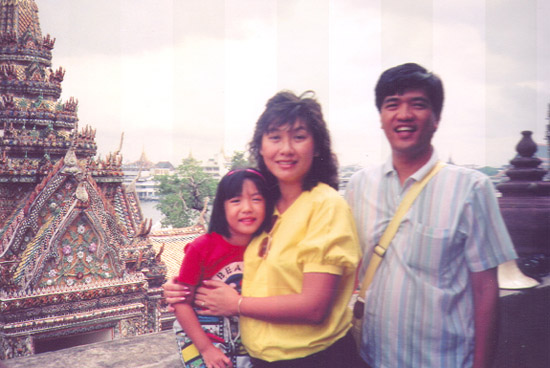 With her parents

