In the beginning

In the beginning was Brazil, and Brazil was confident, and Brazil fell, and Brazil wept.

Pride leaps before a fall.

I’m predicting a Germany-France final, although I’m thinking this has turned out to be more of a Euro Cup than a World Cup.

This goes back to economics, and how the rich nations are able to afford better coaches and better training sessions.

Let the rich get richer, with rich players pocketing gazillions of dollars whilst their fellow countrymen either party the night away with alcohol galore or watch their famous star on a ramshackled TV amidst adjunct poverty.

24 days down, 6 days to go.

Let the rich get better and the good get richer.

Khattam Shud.

Posted in Personal, The Cause | Leave a comment

Islam Hadhari II

Article in theSun last week:

National policy must aim to embrace all
Islam Hadhari: Developmental framework

Guest: Tricia Yeoh
For the first time in Malaysia, a religious framework has been instituted within a national socio-economic development plan. Islam Hadhari was introduced in the Ninth Malaysia Plan as a “comprehensive and universal framework for the nation”.

Indeed, Islam Hadhari is interwoven into many chapters, promoting “a progressive developmental outlook” and “a moral society with strong religious and spiritual values.” This has stirred a wave of interest in Islam Hadhari: what it is, its implications, and how Malaysians should react to it.

Islam Hadhari literally translated means Civilisational Islam, a theory of government based upon the principles of Islam as derived from the Holy Quran. It seeks to emphasise development consistent with the central tenets of Islam. In particular, ten fundamental principles have been outlined and this includes faith and piety in Allah, a just and trustworthy government, and freedom and independence to the people.

Continue reading

Posted in Religion | Leave a comment

Case Reopened

Case Reopened on Lina Joy… Extracted from various sources below:

Lina Joy, a Muslim converted to Christianity in 1998, has since been seeking her constitutional right to practise the religion of her choice. According to the Law Reform (Marriage and Divorce) Act 1976, Lina could not register with the Registrar of Marriage as long as ‘Islam’ is on her identity card, which means she is legally a Muslim. The National Registration Department (NRD) had, in October 1999, accepted the reason given (the change of religion) and changed her original name, Azlina Jailani, to Lina Joy.

In April 23 2001, High Court Justice Datuk Faiza Tamby Chik rejected Lina Joy’s application that to drop the word ‘Islam’ on her identity card. He said that Malays could not renounce Islam because an ethnic Malay was defined by the Constitution as “a person who professes the religion of Islam,” and the jurisdiction in conversion matter lay solely in the hands of Syariah Court.

Lina is currently appealing against the 2001 High Court’s decision on the grounds that it contravened Malaysia’s constitutional guarantee of religious freedom.

Lina Joy was granted leave to apply to the Federal Court on April 13, 2006. The date of hearring is scheduled on June 28.

The appeal will be confined to three main issues (April 14, 2006, New Straits Times):

• Whether the NRD was legally entitled to require someone to produce a certificate or a declaration or an order from the Syariah Court before deleting “Islam” from an applicant’s identity card;

• Whether the NRD has correctly construed its powers under the National Registration Regulations 1990 to impose the above requirement when it is not expressly provided for in the regulations; and

• Whether the landmark case Soon Singh vs Perkim Kedah — which held that Syariah Courts have the authority over the civil courts to hear cases of Muslims renouncing their religion — was correctly decided.

Constitution provisions: Article 11:1 Every person has the right to profess and practice his religion

Article 160:2 “Malay” means a person who professes the religion of Islam, habitually speaks the Malay language, conforms to Malay custom

No clear legal process on conversion matter

In August 2002, the Court of Appeals ruled that only the Islamic court is qualified to determine whether a Muslim has become an apostate. These rulings make conversion of Muslims nearly impossible in practice.

Posted in Religion | Leave a comment

One Month

Productivity in the country must have dropped for the entire month dating 9th June to 9th July. I certainly see more sleepy eyed droopy faced expressions all around. Or am I referring to the reflection in the mirror.

A final 6 and a half matches to go…

Posted in Personal | Leave a comment

Defining Race

What is a race?

I asked myself that tonight and found myself scratching my head. Because you have nation-states like Japan, where there is no question of race and nationality. Think also of China and England where race and nationality are synonymous with the other. Japanese are Japanese by race AND nationality. The English in England are English by race AND nationality.

Things become a bit blurry when migration takes place. So you have an Australian by nationality but English by descent. Extend this to Malaysia. You have Malaysians by nationality but Malay, Chinese and Indian by descent… in other words, a society segregated by race.

In the case of the latter two, the Chinese and the Indians come from a specific place from which race and nationality were never separate – China and India. So fine, being Chinese and being Indian means accepting one's racial descent.

But I've always wondered where the Malays came from. Originally from Malaya (if we presume Malays have to be from a similar country-sounding-place: Malaya) ?

I read interestingly on Wikipedia (which is an amazing mine of knowledge nuggets, by the way) the following:

According to the History of Jambi, the word Melayu or Malayu originated from a river with name Sungai Melayu near to Sungai Batang Hari of today's Muara Jambi, Jambi province of Sumatra, Indonesia.

Generically, the name "Malay" is used to describe all the numerous related groups inhabiting the Malay Archipelago, and which are not of older aboriginal stock. These include the Aceh, Minangkabaus, Bataks and Mandailings who live in Sumatra ; Java and Sunda in Java ; Banjars, Ibans, Kadazans and Melanaus in Borneo ; Bugis and Torajas in Sulawesi ; the various dominant ethnic groups in the Philippines such as the Tagalogs, Ilocanos and Ifugao of Luzon island, the Bisaya of the central Philippines, the Maguindanao, Tausug and Bajau of Mindanao and the Sulu Archipelago ; and the people of East Timor (again, excluding those of older Papuan stock).

In other words, the term Malay should anthropologically be used to refer to the different peoples of the Malay Archipelago within the region… Not exclusively belonging to any one country… It is a people group that is spread into different countries.. hmmmm… read more below:

In a broader sense, the term Malay also includes most ethnic groups in the Philippines and Indonesia west of Papua. It is best understood as a cultural, not racial grouping. For example, people of the Maluku and Nusa Tenggara islands up to Timor have darker skin but are more readily described as Malays than the Dayaks of inner Borneo.

Okay, so this makes things a little clearer. It is best understood as a cultural, not racial grouping… So it is not a race then? To complicate things further,

Most Malays had converted from Hinduism, Buddhism and animism to Islam in the early 15th century; influenced by Arab, Chinese and Indian Muslim seafarers during the Islamic Golden Age.

Really? I hadn't known that, to be honest…

Their conversion to Islam from Hinduism and Theravada Buddhism began in the 1400s, largely influenced by the decision of the royal court of Malacca. Most Malays in Thailand, South Africa, Sri Lanka and Surinam — being descendants of those who had already been Islamised in Malaysia, Indonesia, etc — are also Muslims.

Never knew this either.

So the more significant question is… what does it mean to be a Malay living in Malaysia? I'll leave it at that.

Posted in Reflections, Religion | Leave a comment

Go Ghana!

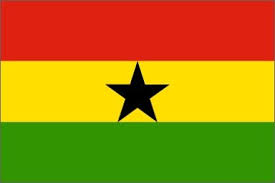
In a previous post, I wrote about how I would support the team that has a lower GDP relative to whoever they were facing. Tonight, Ghana faced US (read: Lowest vs the Highest GDP countries that still remained in the World Cup). 

And my reason in supporting them now goes beyond theoretics. They play with such spirit and passion. And they owe their allegiance to their God/Allah. When they play, you know they are driven by a powerful force. And so I was overjoyed, together with all their countrymates at home dancing and partying to African beats and drums, because I could feel their passion. Of course, they face Brazil in the knock-out round, next stage. No guesses for who is the favourite there…

But that they have gotten this far is a tremendous feat in itself. This is the first time they've even entered the World Cup tournament. And they are the last remaining African country. I blow them a flying kiss and hope they'll continue to play with unreserved spirit and passion!

Go Ghana! 

Posted in Personal | 2 Comments

Sejarah Malaysia!

Prehistoric Malaysia (40,000-2,000 BCE)
Gangga Negara (2nd-11th century CE)
Langkasuka (2nd-14th century)
Pan Pan (3rd-5th century)
Srivijaya (3rd century -1400)
Majapahit (1293-1500)
Sultanate of Malacca (1402 – 1511)
Sultanate of Johor (1528-current)
Jementah Civil War (1879)
White Rajahs (1841-1946)
British Malaya (1874-1946)
Anglo-Dutch Treaty of 1824
Burney Treaty (1826)
Straits Settlements (1826-1946)
Klang War (1867-1874)
Pangkor Treaty of 1874
Federated Malay States (1895-1946)
Unfederated Malay States (19th century-1946)
Anglo-Siamese Treaty of 1909
Battle of Penang (1914)
North Borneo (1882-1963)
Mat Salleh Rebellion (1896-1900)
World War II (1941-1945)
Battle of Malaya (1941-42)
Parit Sulong Massacre (1942)
Battle of Singapore (1942)
Syburi (1942-1945)
Sandakan Death Marches (1945)
Malayan Union (1946-1948)
Federation of Malaya (1948-1963)
Malayan Emergency (1948-1960)
Bukit Kepong Incident (1950)
Independence Day (1957)
Federation of Malaysia (1963-present)
Indonesia-Malaysia confrontation (1962-1966)
Brunei Revolt (1962-1966)
Expulsion of Singapore (1965)
May 13 Incident (1969)
New Economic Policy (1971-1990)
Operation Lalang (1987)
1988 Malaysian constitutional crisis (1987-88)
Asian financial crisis (1997-98)

History of Malaysia – interesting to see the timeline!  Taken from Wikipedia.

Posted in Uncategorized | 1 Comment

The Rudest of them all

So we are the rudest of them all. Okay, maybe that's pushing it…

We are the third rudest city in the world, according to an article posted in Malaysiakini, and based on a survey done by Reader's Digest:

Bandaraya Kuala Lumpur berada di tangga ketiga sebagai bandaraya paling biadap di dunia, demikian menurut satu kajiselidik yang dijalankan oleh sebuah majalah antarabangsa.
Kajiselidik itu dijalankan oleh majalah Reader's Digest di 35 bandar raya dunia itu dan disiarkan berulangkali oleh rangkaian berita CNN. 

Now how's that for Malaysia Boleh? Malaysia Boleh Biadap…

Posted in Uncategorized | Leave a comment

Unleashing the Underdogs

::the ball is round::

Everyone has asked me who I support for the World Cup, which I try to watch faithfully every night (the interesting matches)… My answer is the underdogs, and let me qualify that. The underdogs equals those who are economically less stable than the other team. I rationalise this by saying that the country that is wealthy does not require a win to ensure national solidarity. A poorer country will greatly benefit from a win in the World Cup, creating a sense of national spirit and patriotism, an outlet away from woes.

See the following table:

  • Rank 1: US: GDP 12,485,725
  • Rank 2: Japan: 4,571314
  • Rank 3: Germany: 2,797,343
  • Rank 5: UK: 2,201,473
  • Rank 6: France: 2,105,864
  • Rank 7: Italy: 1,766,160
  • Rank 9: Spain: 1,126,565
  • Rank 10: South Korea: 793,070
  • Rank 11: Brazil: 792,683
  • Rank 15: Australia: 707,992
  • Rank 16: Netherlands: 625,271
  • Rank 18: Switzerland: 367,513
  • Rank 22: Saudi Arabia: 307,770
  • Rank 33: Portugal: 183,436
  • Rank 34: Argentina: 181,662
  • Rank 40: Czech Republic: 123, 603
  • Rank 53: Ukraine: 81,664
  • Rank 63: Croatia: 37,553
  • Rank 68: Tunisia: 30,185
  • Rank 89: Trinidad & Tobago: 15,870
  • Rank 100: Ghana: 10,694

Just to give an idea of where we stand, Malaysia is ranked 39th with GDP of 130,796. Data is in millions of US dollars. This is taken from the IMF, World Economic Outlook Database April 2006. So, by logical conclusion, I will support all those countries from the bottom up – up till and until they are kicked out from the tournament.

I might not be a loyalist to any one team, but heck, these countries ain't even my own. I might as well support them for a valid reason and principle! 🙂 Go Go Ghana!

Posted in Reflections | Leave a comment

Temple Bashing

Unlicensed temples have been abolished to dust all around Klang Valley recently. Take a look at the following:

Picture from malaysiakini.com and also the following excerpt: 

Over the years, local authorities have been regularly demolishing temples saying the structures were built illegally. Most were small wayside shrines.

However, in recent years, several large 100-year-old temples, built during the British colonial era, were demolished not just because they stood in the way of development but simply because they were classified as "illegal structures”.

There have been protests and demonstrations at the time of temple-bulldozing, but to little avail. In the last three temples, nine temples have been brought down. Demolishing these temples have not helped sentiments of the Hindus in feeling welcome, nor part of this country… (doesn't take a genius to figure this one out)… 

If the temples are a sacred place of worship, and if the constitution guarantees freedom of worship, then bulldozing a place of worship of a group means acting against the Constitution. Sure, the argument given is that they are illegal and without permit. Authorities could practise a little grace and allow "grace periods" for the temple owners to apply for permits. (How quickly the permit is granted is another story lah) The temples are mostly for those in the lower income group, who are unable to take legal action.

And the picture cries out to me, because for many, these have been their central point of life, their comfort zone, their oasis in the desert of poverty. 

I do not know the detailed historical background of this story, and do not claim to, but it is no comedy any longer. If this is called embracing a multireligious society, I can but smile wryly or shed a quiet tear for this increasingly marginalised group.  

Posted in Religion, The Cause | 2 Comments