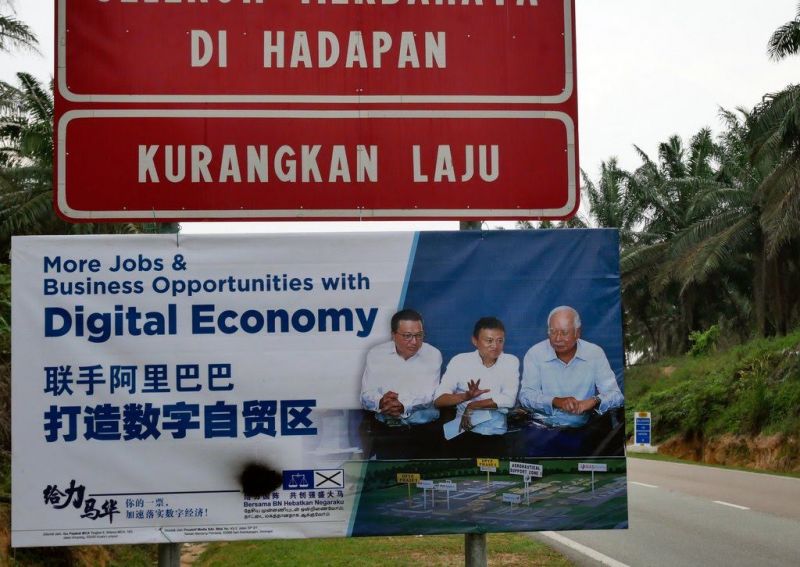
This was published as a “Trends” by the ISEAS-Yusof Ishak Institute Singapore, at which I am a Visiting Research Fellow (July to December 2020) in October 2020.
• On 9 May 2018, Malaysia’s Barisan Nasional (BN) government lost the country’s 14th general election (GE14). Replacing it was the Pakatan Harapan (PH) coalition, made up of four parties, three of which had had experience cooperating with each other for a decade, namely Parti Keadilan Rakyat (PKR), the Democratic Action Party (DAP) and Parti Amanah Negara (Amanah). The fourth was the new Parti Pribumi Bersatu Malaysia (PPBM) led by Dr Mahathir Mohamad.
• The election also saw equally significant changes at the state government level. PH now controlled seven states in total, up from two, while BN went from controlling ten states to retaining but two. PAS regained Terengganu and with its control over Kelantan now held the two East Coast states. The Sabah state government, held by Parti Warisan Sabah (Warisan) aligned itself with PH, while the Sarawak state government chose to stick with BN.
• As many as ten of the sixty promises listed in the PH 2018 election manifesto related to federalism and Sabah and Sarawak, an indication of the growing importance of these two states (and of state issues more generally).
• The PH administration’s two significant set-ups were the Special Select Committee on States and Federal Relations and the Special Cabinet Committee on the Malaysia Agreement 1963 (MA63). Serious attempts were made to address concerns by both committees, with achievements being more visible in the Special Cabinet Committee on MA63, possibly due to the greater attention given on Sabah and Sarawak. Issues brought up within the Parliamentary Special Select Committee were not substantively addressed.
• PH’s time in power saw how states aligned to it maintained a smooth working relationship with the federal government. What was more interesting to note was that even non-PH aligned states such as Kelantan, Terengganu and Perlis also received favourable attention from the federal government.
• Federal-state relations were much more aggressively tackled under the PH government than under any other preceding administration.
This piece was published as a “Perspectives” by ISEAS-Yusof Ishak Institute Singapore, at which I am currently a Visiting Research Fellow (July to December 2020), on 11 September 2020.
• The Pakatan Harapan-aligned Sabah state government held by Parti Warisan Sabah (Warisan) fell in late July 2020 when 13 state assemblypersons defected to align with former Sabah Chief Minister and Sabah Barisan Nasional chairman Musa Aman.
• The Sabah state election will be held on 26 September 2020, ahead of a general election which is widely expected to be called before the end of the year. The outcome of the Sabah state election will therefore carry important lessons for all political parties at the national level in crafting their political strategies.
• Historically, political alignment with the federal government seemed to be the most decisive factor in shaping the outcome of state government formation. Nonetheless, the Rulers or governors of respective states have played a crucial role on various occasions, by exercising their discretion on whether it was appropriate to appoint a new Chief Minister or allow the dissolution of a state legislature to hold new elections. The Rulers in turn have to operate within the framework of the state constitutions.
• The electoral strategies at state level have become extremely complicated, given the existence of multiple parties, the fluidity of their collective and individual members’ political loyalties, and the ongoing negotiations over leadership and prime ministerial candidacies.
This was first published on New Mandala on 12 August 2020 here. This is a short version that summarises the key thrusts of the larger report that can be found here. This article (and the corresponding report) is part of a New Mandala series related to the Supporting the Rules-Based Order in Southeast Asia (SEARBO) project. This project is run by the Department of Political and Social Change at the Australian National University and funded by the Australian Department of Foreign Affairs and Trade.
Malaysia’s Pakatan Harapan (PH) government fell after a prolonged leadership tussle in February 2020, and the new Perikatan Nasional (PN) government was installed on 1 March. Amid the political uncertainties came the COVID-19 crisis. How have the twin shocks of political crisis and the pandemic affected federal-state relations? How have federal-state relations in turn impacted government responses to the pandemic and national political dynamics?
Malaysia was established as a constitutional federation in which the individuality of its 13 states was to be clearly maintained. Over the years however, state powers have gradually eroded. Local council elections were abolished in 1965. The Senate, meant to be the ‘house of the states,’ now skews to the centre with more federally-appointed than state-appointed members. The Federal Constitution 1957 itself contains several articles that allow for a strong central government, for instance providing that federal law prevails over state law in the event of inconsistency. Other institutional and legal changes have further weakened state autonomy.
Given these constraints, political shifts at the national level invariably affect outcomes within states in a number of ways, not least the distribution of institutional and fiscal resources. The COVID-19 crisis crucially tested the boundaries of federal-state relations when decisions from the centre were not always received well by state governments. States also took the initiative to manage public health in unconventional ways. A longstanding dispute over autonomy in the East Malaysian states of Sabah and Sarawak has also created opportunities for new political alignments, as well as reignited the debate over oil rights. The author’s research unpacks these federal-state tensions and explores their implications and ramifications in further detail in the downloadable report below.
Malaysia is politically centralised, with both administrative and fiscal decision-making gravitating towards the centre. Any political change at the federal government level invariably impacts upon downward resource distribution. The political crisis in 2020 did precisely that: machinations at the national level directly precipitated changes in several state governments.
PN gained the lion’s share of states with 8 in total: Kelantan and Terengganu (the 2 East Coast states led by PAS), Perlis and Pahang (already UMNO states), and the 4 wins of Johor, Malacca, Perak and Kedah. This left PH with only 3 states, down from 7: Selangor, Penang and Negeri Sembilan. Within the newly-acquired PN states, individuals affiliated with PN immediately replaced PH nominees within the boards of government-linked companies (GLCs), and for local councilor and village committee appointments.
Given the highly centralised nature of resource distribution in Malaysia, states affiliated with the federal government invariably stand to gain by being granted access to greatly demanded resources. Members of parliament newly in opposition have had their constituency development funds (CDFs) effectively cut off, affecting their ability to provide aid for their constituents amid the pandemic. At the height of the COVID-19 crisis, there were reports of unequal access to food basket aid at both the national and state level. Punishing the opposition in discriminatory resource allocation seems to have been a tactic employed by both sides of the political divide. In Selangor, a PH-controlled state, PN-aligned state assemblypersons were also denied special COVID-19 funding allocations.
Opposition-led states will also invariably face difficulties in funding projects. For instance, Penang’s Transport Master Plan may no longer receive federal guarantees for the bonds needed to fund the large infrastructure project. Given highly-charged corruption investigations against former Chief Minister Lim Guan Eng and his recent arrest, the entire project’s viability may be under question.
The pandemic’s effects on federal-state relations
The COVID-19 crisis has offered an important study of the legality and constitutionality of Malaysia’s three-tiered system of government. When the federal government made plans to open up the economy under a relaxed version of the country’s movement control order, it did so in a way that did not meaningfully include the states. 9 out of 13 states chose to defy the order, including 3 that were aligned with the PN government (Pahang, Kelantan and Sarawak). There are two opposing legal views: one considers that going against federal law was extra-constitutional, while the other considers that states were within their full legal rights.
Based on the first legal perspective, states would be considered in contravention of federal law because the decision to open up the economy was carried out under the Prevention and Control of Infectious Disease Act 1988 (Act 342)—a federal law. A related federal order defines an “infected area” to include all states and federal territories in Malaysia. The constitution does require that states comply with federal law, stating that they should not “impede or prejudice” the federal government’s exercise of power.
The other perspective emphasises that the Federal Constitution defines “public health, sanitation and prevention of infectious diseases” within the Concurrent List, where authority is shared between the federal and state governments. Further, the Local Government Act 1976 gives local governments (which come under state purview) the authority to preserve public health and prevent the outbreak and spread of diseases.
Whatever the legal constraints, many state governments went ahead to take COVID-19 management into their own hands. Sarawak, Sabah, Penang and Selangor stand out, but many others also disbursed their own aid packages, developed their own contact tracing applications, created state-level COVID-19 crisis teams and co-operated well with federal health agencies.
States are playing a crucial and underreported role in managing the twin public health and economic crises—so much so that their experiences put to question whether the constitutional boundaries continue to be relevant. States, despite not having full legal control over public health and the economy, are able to meaningfully contribute to these areas anyway.
Oil politics amid political contestations
Longstanding federal-state tensions over oil rights have also arisen over the past months, affecting both the national political uncertainty and the response to the pandemic. The Eastern oil-producing states of Sabah and Sarawak, along with Kelantan and Terengganu on the eastern coast of Peninsular Malaysia, have in recent years escalated their demands over rights to oil and gas resources.
Given that the current PN government is operating on a razor-thin majority (PN’s recent appointment of the speaker in parliament received a majority vote of just one), both sides of the political divide are continuously wooing MPs from Sabah and Sarawak. Negotiations over hotly contested issues such as oil have invariably turned political.
Both Sabah and Sarawak have previously demanded increases in oil royalties, and it has been reported that current Prime Minister Muhyiddin is willing to make these concessions. National oil-producing company Petronas played a crucial role in easing federal-state tensions by paying a highly-disputed sales tax to Sarawak, which was reportedly linked to the premature departure of its CEO. Petronas, through revenues raised from oil and gas resources, contributes 19 percent of national revenues annually. Fiscal pressure will likely increase in the near future as the economy struggles to pick up amid a global recession on the back of COVID-19 and the US-China trade war.
Further evidence of East Malaysia’s prominence amid national political contestations came with former premier Mahathir Mohamad’s sudden announcement that he would support Sabah Chief Minister Shafie Apdal as a prime ministerial candidate, in a bid that would seemingly recognise the role and contribution of East Malaysia at the national level. National-level politics directly led to the dissolution of the Sabah state government at the end of July when 13 state assemblypersons defected to join a PN-aligned political leader. The nation will soon see the first full state-wide election since the change in government this year.
What are the long-term prospects for federal-state relations? The pandemic has shown federal and state governments can work in harmony, and that states can emerge with innovative solutions to public policy problems. These recent experiences may even provide state governments with the impetus to explore how they can deepen their autonomy in domains outside of public health.
Ultimately though, political alignment with the federal government determines outcomes at the subnational level. One PN minister has already encouraged Sabah voters to support the state coalition which shares the aspirations of the federal government in the upcoming state election. Meanwhile, Mahathir Mohamad’s announcement in early August of plans to establish a new political party, with early signs that several state leaders will defect from Bersatu, may further affect the stability of state governments. Malaysia’s dual political and pandemic plight has shed light on federal-state relations, but has not yet substantively altered its arrangements.
I have been using the Forum of Federations website quite a bit in my research, so very pleased to have written this piece for their “Federalism and the COVID-19 Crisis” series for Malaysia.
This was first published on the Forum of Federation website on 26 May 2020, and is available here.
Federalism and the COVID-19 Crisis: State-Federal Tensions Arise in Malaysia
Tricia Yeoh
Already a highly centralised federal system,
the COVID-19 pandemic led Malaysia’s federal government to adopt even more
top-down approaches in managing the public health crisis. Led by a new
political coalition barely two weeks old when the crisis emerged, the federal
government – through its National Security Council (NSC) chaired by the Prime
Minister – would be the primary decision-making platform in responding to the
crisis. The measures issued by NSC included for a strict movement control order
(MCO) that would last six and a half weeks between 18 March and 3 May in which,
with the exception of essential goods and services, all industries were
mandated to close. The NSC would also later make the decision to open up the
economy under a conditional MCO (CMCO), in which most industries were allowed
to resume operations beginning from 4 May.
In its very first meeting to discuss COVID-19
mitigation plans, the government excluded the heads of state governments
controlled by the opposition coalition, although later it reversed this
decision and invited the subnational leaders to subsequent meetings. This
sparked initial tensions between the federal and state governments, which would
later flare up again when states were not meaningfully consulted.
The law used to enforce the MCO and the CMCO
is the Prevention and Control of Infectious Disease Act 1988, which sets out
which authorities are permitted to act and under what circumstances during an
outbreak. The Prevention and Control of Infectious Diseases (Declaration of
Infected Local Areas) Order 2020 defined the “infected area” to include all
states and three federal territories in Malaysia.
Unlike some countries that announced that
their versions of a lockdown would last for a month or more, to be potentially
extended once or twice before easing, the authorities in Malaysia only declared
the MCO extensions every two weeks. As such, up to the end of the strict MCO, there
were four different phases, each of which had regulatory variations that often
caused negative unintended consequences. For instance, initially people
required police permission for people to travel between states. But the
requirement was dropped when thousands of Malaysians crowded police stations
before the deadline, causing even more public contact en masse. Interstate
travel was later restricted only to industries with official authorization, but
many companies could not obtain approval quickly enough within the respective
phase of the MCO, before different rules were introduced in the following
phase. Having slightly amended rules for different phases caused some confusion
amongst the public, requiring them to check the new regulatory requirements
every two weeks.
State governments also issued their own
regulations for business operating hours of shops, eateries, petrol stations,
and markets. They are empowered to do so because local governments have the
authority to regulate operating hours, and to set conditions for the issuing of
licenses and permits (which they issue). Crucially, local governments fall
under state jurisdiction as provided for under the Federal Constitution’s Ninth
Schedule. The Local Government Act 1976 is a robust piece of legislation that grants
local governments, amongst other powers, the ability to preserve public health and prevent the outbreak
and spread of diseases, and to regulate and enforce quarantine, the
disinfection of persons, and the disinfection of places and things. Of course, if any of
these measures had been in direct contravention of the federal government’s
legal requirements under the MCO, the federal law would prevail. Article 81 of
the Federal Constitution says that state government authority must be exercised
so as not to impede or prejudice the exercise of the federal government’s executive
authority.
The legal interpretation of this principle
became much more pertinent when the federal government abruptly announced that
the MCO would ease, giving only three days’ notice. Nine state governments in
total reacted immediately by saying they were either not following (Kedah,
Sabah, Pahang, Penang, Kelantan and Sarawak) or not fully complying (Selangor,
Perak and Negeri Sembilan) with the easing of the virus control measures
concerning economic activity, otherwise known as the CMCO. They believed that
the reopening of all sectors and industries was too abrupt, arguing that buffer
time was needed to allow state governments and companies to adopt new standard
operating procedures (SOPs) to ensure hygiene and public health.
Some experts cited Article 81 (above) in arguing
that states must adhere to the federal law of the Prevention and Control of
Infectious Diseases Act 1988, because all states had in 1989 agreed to promulgate
a uniform law to prevent and control infectious diseases in Malaysia, enforceable
throughout the country. There is, however, an alternative, and equally
compelling, view advanced by other experts. This is that
states have the right to defy the federal government’s law is based on the fact
that the Federal
Constitution places public health, sanitation, and prevention of infectious
diseases within the Concurrent List in the Ninth Schedule. It is also bolstered
by the provisions of the Local Government Act as described above. Since all
laws must adhere to the supremacy of the Federal Constitution, this means that
both federal and state governments are to jointly decide on issues pertaining
to these areas with equal weight.
Because the Constitution is vague on how
“joint decisions” are to be made, it has never been clear whether state
legislative assemblies need to vote on a particular matter of concurrent
interest – and further, pass state-level legislation to that end – or whether
mere ‘consultation’ is all that is required. At a meeting held on 28 April between
the federal and state governments, the gradual reopening of the economy was
apparently raised by the Prime Minister. However, one state government chief
executive (the Chief Minister of opposition-led Penang) claims that the
following approach was agreed at the meeting: first, the “District Risk
Reduction Programme” proposal by the federal Ministry of Health was for only
“green zones” to be reopened; second, the official SOPs were to have been
shared with all states in advance of any reopening; and third, the states were
to have been given time to strategise. However, the federal government proceeded
on 1 May to announce that all zones – green, orange, red – would simultaneously
reopen on 4 May, without informing the states or sending them the SOPs.
The federal government responded harshly with
a statement saying that companies may possibly sue state governments if they
refused to reopen. This was rebutted by the Penang state government, which stated
that it was prepared to face legal challenges from industry players “if that is
the repercussion for protecting its people” from the pandemic. While there may be different interpretations as to
the legality of states’ non-compliance, it is evident that in order for any
solution to the COVID-19 crisis and its accompanying economic fallout to work,
it must win the support of everyone in the country, across all states and
sectors.
The
experience of tackling the COVID-19 crisis has highlighted yet again the
tensions between federal and state governments in Malaysia. The new reality is
that state governments, regardless of political affiliation (five out of the
nine non-complying states were in the same political coalition as the ruling
government), will begin to seek to exercise their legitimate constitutional
rights more actively. Although Malaysia has been accustomed to a strong, highly
fiscally and administratively centralised federal government since its
independence in 1957, this is now very likely
to gradually
change. Federalism formed the very foundations of the nation, and states and
local governments are well-placed to determine their own risk levels. They are
better suited to comprehend the unique needs of their respective states’ geographic
and demographic circumstances. In fact, alongside the federal government’s
fiscal stimulus package of approximately RM30 billion, many states complemented
this by implementing their own aid packages to small businesses, frontline
health workers, and low-income households.
The COVID-19 crisis is unlikely to end
anytime soon, with some experts predicting it will take as long as 18 months
before a vaccination is publicly available. In order to obtain the buy-in of
all segments of society within all states required to deal effectively with the
impact of the virus, the federal government’s decision-making processes will
have to adapt to be more meaningfully inclusive and consultative. There is also growing concern
that by choosing not to table the economic stimulus package in Parliament for
debate and approval, this exacerbates the federal government’s executive
dominance with no room for scrutiny from amongst parliamentarians, the latter
of whom would represent states across the country. Finally, the federal
government is also faced with greater pressures on its public purse, as oil
prices have plummeted – approximately 20 percent of Malaysia’s national revenues
are derived from oil – and its fiscal deficit is growing as a result.
Decentralising the country’s fiscal management will permit states to take some
responsibility for the nation’s post-crisis economic recovery. In the long run,
whether or not the federal government recognises it, the COVID-19 crisis has
decentralised governance in ways that will change public administration in
Malaysia for good.
KUALA LUMPUR, 14 MAY 2020: IDEAS has published Policy IDEAS No. 63, “The Political Economy of Federal-State Relations: How the centre influences resource distribution to the periphery”, authored by IDEAS Fellow, Tricia Yeoh. The paper is the second in a series of policy papers on federalism in Malaysia.
Despite Malaysia being set up as a federation, it is highly centralised fiscally, where states and local governments do not have much fiscal-raising powers. The paper shows how the federal government’s control of how financial resources are distributed downwards (to states, local governments and communities) began in a highly politicised environment during the Tun Abdul Razak years. These patterns of political determination continue today, done through highly unequal Constituency Development Funds (CDF) and other “politico-bureaucratic” set-ups.
The author opines that the current system is not sustainable, as it causes politicians to seek alternative sources of political funding if they cannot access it from the federal government in an impartial and unbiased way. This is to be expected as one of the core duties of politicians is to serve their constituents. The CDF model should also be reconfigured to reduce financial dependence on politicians, especially in urban areas. Development funds can instead be disbursed through existing institutions like local governments and land district councils.
The paper recommends four steps to encourage more systematic and rules-based resource distribution from the top down, namely:
1. Provide greater fund-raising flexibility for state and local governments
2. CDF allocations to be given regardless of party affiliation
3. Table a CDF Bill in Parliament
4. Abolish the duplicate Federal Kampung Community Management Councils (MPKKPs) across all states
The first paper in this series, “Reviving the Spirit of Federalism: Decentralisation Policy Options for a New Malaysia” can be downloaded here.
Thank you August Man Magazine for including me in its feature in conjunction with World Press Freedom Day on 3 May. The full piece can be found on its website here. They also kindly sent me a PDF version of the piece here.
Media Watch: Reporting on the Reporters (Part One)
Celeste Goh
With May 3 being World Press Freedom Day – a day proclaimed by the United Nations General Assembly in 1993, following the commemoration of the Windhoek Declaration two years prior (a statement of free press principles put together by the newspaper journalists in Africa during a UNESCO seminar in Namibia) it is a day for media professionals around the world to reflect on the issues of press freedom and ethics, with this year focusing on “Journalism without Fear or Favour.” While the annual conference in The Hague, Netherlands may have been deferred to October due to the ongoing pandemic, nevertheless, we celebrate the industry in our country that has been doing its journalistic job without fear or favour – going as far as compromising personal safety to deliver the latest and truest news to the general public.
Tricia Yeoh
Awaiting Justice Still
The body of formal political aide Teoh Beng Hock was found in the premise of Plaza Masalam in Shah Alam on July 16, 2009, having fallen from a window of the Malaysian Anti-Corruption Commission (MACC) office on the 14th floor. This was following the custody he was brought into for questioning by the MACC the day prior, which allegedly lasted about nine hours, well into the wee hours of the morning. Caught in the middle of this hubbub was Tricia Yeoh, who was then a research officer at the Chief Minister’s office for the Selangor State Government. Merely six months into her job then, Yeoh was in charge of managing Teoh’s case on behalf of the state government, and coordinating with Teoh’s family, lawyers and the forensic pathologist team during the inquest. When she left her position at the Chief Minister’s office in 2011, the case of Teoh’s mysterious death remained unresolved. According to Yeoh, it plagued her mind: “The case made an impact on me, because I was a personal aide to one of the state government leaders, [the then Selangor Chief Minister Tan Sri Khalid Ibrahim], just like him. The thought on many minds at the time was that ‘it could have been me.’ The fact that he was a young man full of hope, wanting to help a new state government that had just come into power in Selangor, was all the more tragic.” That very thought itself pushed Yeoh to apply for a grant from the Freedom Film Festival (FFF), a 2003-established platform for filmmakers and activists to showcase and advocate their thought-provoking films to the Malaysian public. The Rights of the Dead premiered at the festival in 2012, a documentary directed by Yeoh herself, and produced by Pusat Komas. “I felt that it was important to document the details of the case, so that it would continue to live on in the public’s mind, especially for such a significant case that involved someone’s death,” Yeoh explains. “It was also important to me to highlight the way that federal government institutions at the time were used to advance certain political objectives, given that the Selangor government was controlled by a political coalition that was opposing the federal government.” July last year was Teoh’s 10-year death anniversary, and very much to the public’s bafflement, the case remains open – even till this day. Five years after the 2014 Court of Appeal, which came to the verdict that “a person or persons were responsible for the cause of the incident, including MACC officers besides the detention,” Selangor Police Chief Datuk Noor Azam Jamaludin has in November 2019 made a statement that Teoh’s case will be reopened for further investigation; this time, with a special task force that involves the Criminal Investigation Department of Selangor, and the Bukit Aman Contingent offices. Several public witnesses have been called to make their statements, including Yeoh, following her published column in the News Straits Times on the day of Teoh’s death anniversary. Yeoh’s career path may have led her to become the Chief Operating Officer of the Institute for Democracy and Economic Affairs (IDEAS), and presently, to pursue a PhD in politics at the University of Nottingham Malaysia. She still keeps a vigilant eye on the case that was thrusted upon her more than 10 years ago – despite being a mere side researcher, rather than a full-fledged investigative journalist.
Were There Any Obstacles During Your Pursuit Of The Case? When I worked for the state government, the obstacles were aplenty. Once, when I brought Thai forensic pathologist Dr Porntip Rojanasunan to Malaysia to assist on the case, I knew there were cars following us around. On the night after Teoh’s body was exhumed for a second post-mortem, and after having dropped Dr Porntip back to her hotel, a car continued to tail me. I was not able to return home for a long time, fearing that they would know where I lived. Till this day, I am not sure who had hired them to follow me. When I was doing research for the documentary in 2012, it was quite an emotional process, poring over the photos and case notes from three years earlier again. I remembered afresh the trauma of having worked in that same environment that eventually led Teoh to his demise. I even had several dreams about him, his family and the case during that time. Otherwise, I have always been very careful in my work, making sure that whatever I say is accurate, and does not deviate from what the official reports have already stated. I’d ensure that proper procedures are followed: when I interviewed MACC, I’d obtain the right letters, clearances and so on, making sure nobody is quoted out of context. These are the strict measures that someone operating in Malaysia must adhere to, especially in our highly politicised environment.
With It Being More Than 10 Years Since His Death, How Does That Make Someone Who Has Spent So Much Time Seeking Posthumous Justice Feel? I must say that I am just a side researcher, and the family takes the hardest hit of all. That being said, I do feel very tired and frustrated. So many simple things could have easily been done, based on the good research of others like the Malaysian Bar. In a way, the 2014 Court of Appeal’s judgments have vindicated much of the work on the case. However, the case has not been “solved” as such, because no individual has yet been charged for any crime. I am not sure how things will unfold from here on, except to call on the current government to ensure that the investigations reopened by the police in 2019 are done thoroughly to completion, and that they should reveal their next steps to the public. If the Court of Appeal ruled that “a person or persons” were responsible for Teoh’s death, the perpetrators need to be identified, and dealt with in accordance with the law.
What Are Some Of The Hard-hitting Life Lessons You Have Taken Away From Working On This Case? That essentially, we shouldn’t expect life – and the various elements and forces that determine life’s outcomes for us – to be fair. There are many things at work that determine a positive or negative outcome in life. Teoh’s case just puts a strong emphasis on this, where the various government and political forces came together in a very tragic and unfortunate way. At the same time, I also learned how to be savvy enough to deal with and manage very tense, sometimes opposing and multi-layered relationships with government bodies, which are not the easiest to understand. How to navigate, analyse, think about and manage relationships with complex bureaucratic institutions and political players – these have been important lessons for me, which have been very useful, not only for my work at IDEAS, but public policy research and advocacy in general.
I am trying to reconstruct what transpired at the National Security Council meeting on 28th April, which was chaired by the Prime Minister and attended by all states’ Menteris Besar and Chief Ministers. Were the states consulted? Did they know the federal government was going to announce the Conditional Movement Control Order (CMCO) on 1st May, to be implemented from 4th May?
This focuses primarily on the nature of the discussion related to the reopening of the economy, and what was the nature of the discussion between the federal and various state government representatives. I am pulling together these facts from interviews with different leaders over the last two days.
It should be said that following the very first NSC meeting at which the Pakatan Harapan state Menteris Besar and Chief Ministers were excluded, the consequent meetings did include them. Senior Minister Azmin Ali said that they were constantly engaged at various meetings, including the NSC, Economic Action Council and other meetings.
Coming to the actual meeting on 28th April, based on an interview given by Penang’s Chief Minister Chow Kon Yeow at Astro Awani’s Consider This programme on 5th May evening, this is what was discussed. See here and here.
First, Prime Minister Muhyiddin Yassin was excited to reopen the economy. He said that every day the economy was shut down, RM2.6bn was lost. It was estimated that if the government waited longer to reopen the economy, by June a few hundred billion ringgit would be lost.
Second, he shared about the Ministry of Health’s “District Risk Reduction Programme”, in which ONLY the green zones would be reopened (see also here). The tagline for this programme was “Attack the red, Protect the green”. This would shift the focus to district level, where the community would work with the government to keep their zones green. They would be responsible to ensure the zones do not become yellow, orange or red.
Green zones are areas with no Covid-19 cases, yellow zones with one to 20 cases, orange zones 21 to 40 cases and red zones 41 or more cases.
Third, the Prime Minister said that the federal government had prepared a set of Standard Operating Procedures (SOPs). He waved the SOP document around in his hand, but said that the SOPs were not ready yet. He said that the federal government would complete the SOPs by 30 April. Chow said the federal government would then probably send the SOPs to all state governments for input in order for them to make the necessary preparations.
Fourth, the MBs and CMs of some states asked for one week to have time for them to provide their input and make preparations to comply with the conditional MCO.
Although it is unclear whether the Prime Minister agreed to give one week to the states for preparation or not (as requested), what seems clear, however, is that:
The original MOH “District Risk Reduction Programme” was meant to allow the economy to reopen gradually, starting with only green zones across the country. The programme was not to allow red zones to reopen, at least not immediately.
The federal government agreed that they would complete the SOPs by 30th April, and made it seem like they would send these SOPs back to the states. This never happened.
When the announcement for the CMCO came on 1st May, to reopen all sectors of the economy on 4th May, it came as a surprise to the state governments, because this was apparently not what was agreed upon at the 28th April meeting.
So far, only Penang’s Chief Minister has come out to clarify what happened in the meeting. He also called Senior Minister Azmin Ali lazy for not having consulted all state governments before going ahead to announce the reopening of the economy.
While others like the Selangor Menteri Besar Amirudin Shari have said they had the rights not to allow certain industries to reopen, as this falls under state jurisdiction, he as well as all other state chief executive leaders need to clarify to their constituent voters what transpired at the meeting, to confirm that what Penang Chief Minister Chow said is indeed accurate.
Reopening of the economy is certainly necessary, but as said by many, the balance has to be nicely struck between public health and economic concerns. And clear, consistent communication is necessary. This has not been achieved by the federal government. It certainly has not instilled trust in its relationship with all state governments. And this will not ensure a smooth, aligned exit strategic implementation of the CMCO.
First published on Malaysiakini here on 5 May 2020.
The federal government’s decision to ease the movement control order (MCO) from May 4 to 12 was abruptly announced just three days earlier, on Labour Day.
Almost immediately, the Sarawak and Kedah governments announced they would not be complying with the conditional MCO. On May 4 itself, nine states in total announced they were either not following (Kedah, Sabah, Pahang, Penang, Kelantan and Sarawak) or not fully complying (Selangor, Perak and Negri Sembilan) with the conditional MCO.
These are fascinating events which indicate a more dynamic federal-state relationship is underway as several state governments seem to be contesting the legality of the federal government’s law.
There are two views on the matter: the first believes that states must adhere to federal law in this instance and the second that states do have some room to manoeuvre.
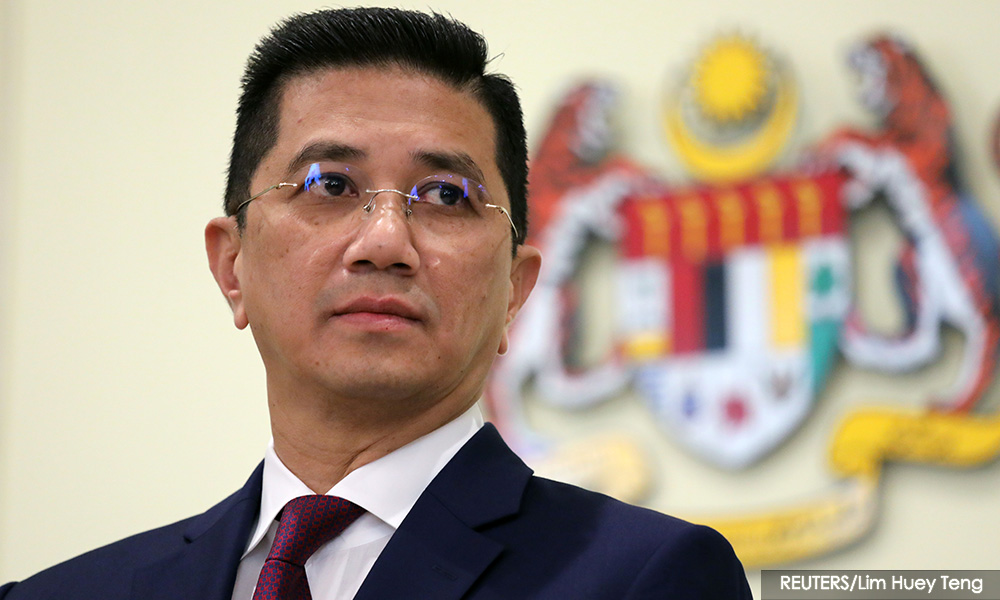
Senior Minister for Economy and the Minister of International Trade and Industry Mohd Azmin Ali (below) in a statement on May 4 had said that state governments reluctant to comply with federal policy to reopen the economy were acting against the federal law of the Prevention and Control of Infectious Diseases Act 1988.
He also said this was done following the agreement of all states in 1989 to bring about a uniformed law to prevent and control infectious diseases in Malaysia and enforceable throughout the country.
Those of the view that state governments must comply with the conditional MCO also refer to Article 81 of the Federal Constitution, which requires that states must comply with federal law to not prejudice or impede the executive authority of the federal government.
However, the Federal Constitution places public health, sanitation and prevention of infectious diseases within the Concurrent List in the Ninth Schedule. Since all laws must adhere to the supremacy of the Federal Constitution, this means that both federal and state governments are to jointly decide on issues pertaining to these areas, with equal weightage.
However, it is unclear how “joint decisions” are to be made: must state legislative assemblies vote on a particular matter, and further, pass state-level legislation to that end? Or is consultation all that is required?
When the federal government passed the Water Services Industry Act 2006 to restructure water services across the country, it carried out extensive consultations with all state governments (without state assemblies needing to vote nor emerge with new legislation) but importantly, also amended the constitution to transfer “water services” from the State List to the Concurrent List.
There were congruence and meaningful consultation. Understandably, we face vastly different conditions today, and time is of the essence.
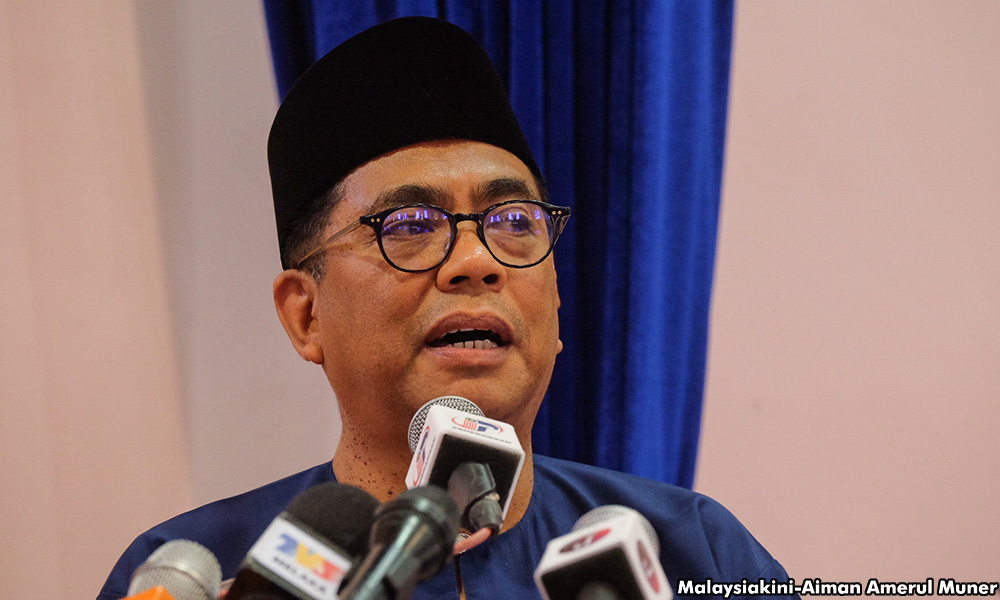
While Azmin in his statement said all state menteri besar and chief ministers were consulted at a meeting that came to this decision on April 28, it is curious that Umno vice-president Mohamed Khaled Nordin (below) claims the government did not consult states before deciding on the conditional MCO.
It is possible that states were briefed as to the federal government’s strategy, but not allowed to weigh in on the actual decision to reopen all economic sectors. For transparency, this point should be clarified publicly by the leaders involved in the said meeting.
Further, there is a third tier of government that must be considered: local government. The Local Government Act 1976 is a powerful piece of legislation that empowers local councils to preserve public health and prevent the outbreak and spread of diseases, and regulate and enforce quarantine, the disinfection of persons and the disinfection of places and things.
Local councils also have the authority to issue licences and permits to businesses. Section 107(2) of the Act also says that “every licence or permit granted shall be subject to such conditions and restrictions as the local authority may think fit and shall be revocable by the local authority at any time without assigning any reason”.
As local governments fall under the purview of state governments, states may be able to instruct local councils to create new conditions for licence and permit-holders. The Act gives local councils the right to enforce these conditions.
Clearly, despite the consultations conducted with state governments, some states have chosen not to comply with the conditional MCO. This raises the question of whether the consultations were meaningfully conducted.
While there may be different interpretations as to the legality of states’ non-compliance, it is evident that for any solution to the Covid-19 crisis and its accompanying economic fallout to work, it must win the support of everyone in the country, across all states and sectors.
The federal government must come to terms with the new reality that state governments will seek their legitimate constitutional rights. Where Malaysia had been accustomed to a strong federal government at the centre for more than 50 years, the 14th general election in 2018 changed the federal-state relations landscape – probably permanently – as states belonging to different political coalitions evened out in number.
No one coalition dominated, as is the case currently under the new Perikatan Nasional (PN) government. The fact that five out of the nine non-complying states are PN (or PN-supporting in the case of Sarawak), sends an even stronger signal that state demands for greater administrative autonomy will grow, regardless of political affiliation.
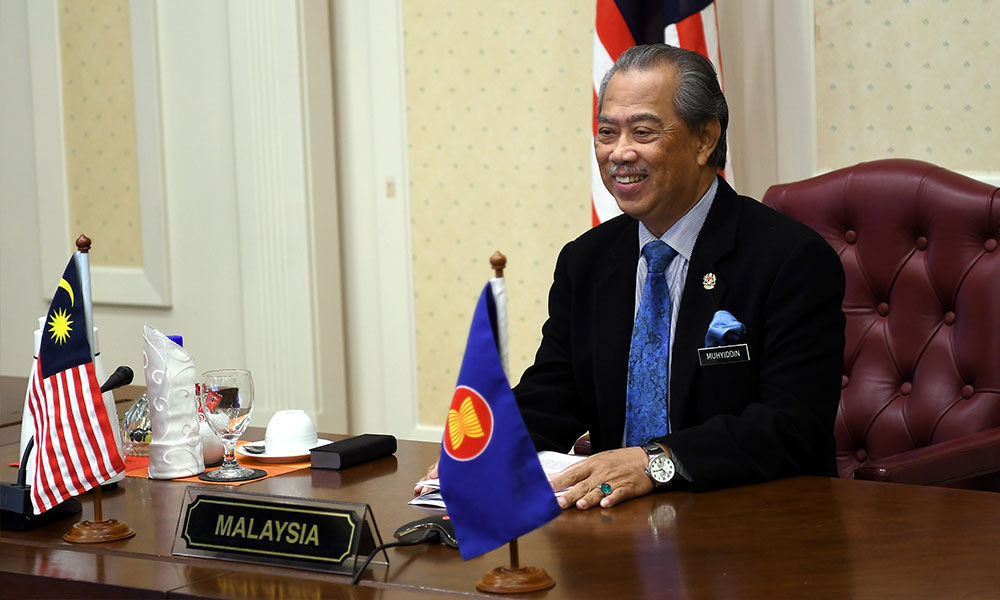
Prime Minister Muhyiddin Yassin (above) is increasingly finding himself in a difficult leadership position. Faced with the twin political and public health crises, he will have to carefully manoeuvre between political party fault lines to shore up public confidence in his command of the situation.
One piece of advice for him and his governing coalition is to take seriously the spirit of federalism that formed the very foundations of this nation. States and local governments are well-placed to determine their own risk levels and can gradually ease movement controls in accordance with their unique geographic and density circumstances. The principle of subsidiarity should apply.
Finally, even if it is shown that states must legally comply with federal government law in the conditional MCO, making decisions without obtaining state government agreement will be politically detrimental and unsustainable in the long run.
More importantly, public health and economic recovery depend on a whole-of-society approach, which will require the buy-in of all states.
State governments making a strong stand based on public health policy grounds, even if seen as resisting the federal government, is a positive move that encourages a trend towards decentralisation and local governance.
I spoke and moderated several IDEAS webinars recently, on Covid-19. I have published them on my website here. These may be useful for those following developments on how the Malaysian government is tackling the Covid-19 crisis. Thanks for following.
The two most recent ones are as follows:
Mitigating the Economic Downside of Covid-19, 27th March 2020
It discussed the steps that must be taken to deal with the negative impact that stems from the pandemic. This includes the support and protection for individuals and businesses affected.
Moderator: Tricia Yeoh, Fellow, IDEAS
Speakers: Dr Jayant Menon, Visiting Fellow, Institute of Southeast Asian Studies Christopher Choong, Deputy Director of Research, Khazanah Research Institute Dr Carmelo Ferlito, Senior Fellow, IDEAS Rachel Gong, Senior Research Associate, Khazanah Research Institute
Covid-19 Stimulus Package: Delivering with Democracy, 9th April 2020
The unprecedented stimulus package of RM 260 billion suggests that the federal government is taking the best possible measures to mitigate economic and public health risks posed by COVID-19. However, in the absence of parliament oversight, open procurement systems, and strong state governments, this may lead to unchecked growth in the federal government’s executive power raising concerns about equity, transparency and accountability. How can we use the power of a functioning parliamentary democracy to make stimulus package effectively deliver its promises and what steps does Malaysia need to take?
Moderator: Aira Azhari Research Manager, IDEAS
Speakers: Lim Wei Jiet, Constitutional Lawyer
Tricia Yeoh, Fellow, IDEAS Former Chief Operating Officer
By Tricia Yeoh, Fellow, the Institute for Democracy and Economic Affairs (IDEAS)
First published on Asialink, The University of Melbourne, on 6 April 2020, here.
The Malaysian government’s National Action Council, set up to address the Covid-19 emergency, held a meeting to discuss mitigation measures on 17 March 2020.
Chaired by the newly sworn-in 8th Prime Minister, Muhyiddin Yassin, the meeting included the chief ministers of all states except the five states controlled by the national opposition coalition Pakatan Harapan (PH). Until a month ago, the PH coalition was the federal government, having won the historic 2018 general elections and deposing the Barisan Nasional coalition that had been in power since independence over 60 years ago.
This act of excluding opposition states in national decision-making, especially over such a grave and critically urgent issue as the global pandemic, alarmed many Malaysians, in a divisive move that was widely criticised. But the reality was that this has always been the practice given the country’s highly centralised and politicised federalist system. In an immediate reaction to the furore over the snub, the government’s top civil servant, the Chief Secretary, apologised for not inviting the chief ministers, that he had only invited the State Development Directors of those opposition states (the directors were actually federally-appointed officers).
It was reminder of how a new coalition government known as Perikatan Nasional (PN), formed only weeks earlier on 1 March 2020 through backroom deals and unexpected realignments, had dramatically altered the landscape of federal-state relations in one fell swoop. Within a week, in frantic new negotiations that took place in multiple states, inter-party and intra-coalition dynamics meant that several elected representatives’ joined and swapped new parties across the new PN coalition, anchored by Parti Pribumi Bumiputera Malaysia (Bersatu), the United Malays National Organisation (UMNO) and old partners MCA and MIC within Barisan Nasional (BN), alongside the Islamic Pan-Malaysian Islamic Party (PAS).
Different coalitions in different states
The events over the past month have resulted in three different state governments changing hands and falling to the new PN government. Pakatan Harapan (PH), reforming as the federal opposition with three remaining parties Parti Keadilan Rakyat (PKR), Democratic Action Party (DAP) and Parti Amanah Negara (PAN) after the exit of Bersatu, lost the states of Johor, Melaka and Perak in successive order. This is an overall gain by the new PN coalition, now controlling seven states compared to PH’s four.
Following the PH federal government collapse, the PN-controlled states are now Kelantan, Terengganu, Perlis, Pahang, and the newly-acquired Johor, Malacca and Perak. PH remains in control of Kedah, Negeri Sembilan, and the industrial powerhouses Selangor and Penang. Sabah remains a PH-friendly state, and Sarawak is a PN-friendly state. Given the Sarawak state elections will take place in 2021, such political support may likely change, since local sentiment with its accompanying demands from the central government usually drives state elections – for instance, restoring state autonomy under the 1963 Malaysia Agreement.
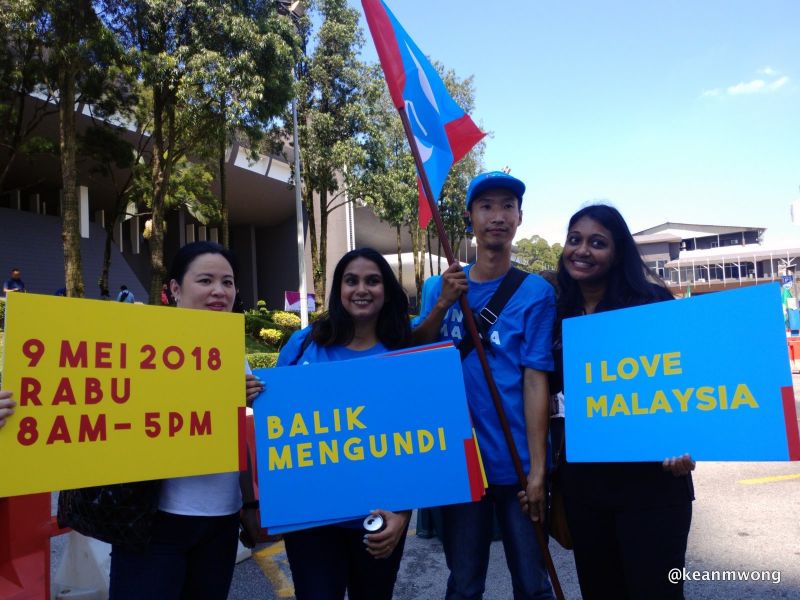
Image Credit: Kean Wong.
For the first time in Malaysia’s history, there exists different coalitions in different states. While the core PN parties of Bersatu, UMNO and PAS typify the same co-operation that exists at the federal level and within most of their states, this is not true for all of them. For instance, where Bersatu formed government together with BN in the states of Johor and Perak, it is actually maintaining its original co-operation with the PH parties in the state of Kedah. The situation is tenuous in Kedah, given the state’s Menteri Besar (Chief Minister) is the son of deposed prime minister Mahathir Mohamad, who is in an opposing faction of the same party with the new Prime Minister.
In Malacca, the two Bersatu state elected representatives initially joined forces with the new PN partners alongside defectors from DAP and PKR. But the Bersatu duo later reversed their decision and Bersatu now belongs in the state opposition. More incredibly, the two Bersatu legislators are even being investigated for corruption, one of whom is a senior party leader and a member of the party’s Supreme Council.
How federal-state relations are impacted
These changes deeply impact the complex dynamics of federal-state relations in Malaysia. The first immediate consequence is in the way federal resources are allocated and disbursed to states. Although there are several constitutionally-guaranteed federal-state grants, only some grants like capitation, state road and cost reimbursement grants are based on set formulae. Others such as the development and contingencies fund grants are arbitrary and subject to discretion, which is highly subjective and politically influenced.
History has shown how the UMNO-led BN federal government has often punished states controlled by the opposition, including through direct political intervention and reducing a variety of federal-controlled funds. The most obvious and well-reported infraction has been the withholding of oil royalties from oil-producing states Kelantan and Terengganu under then-opposition PAS. Now that PAS is part of the federal government, it will hope to restore these oil royalties – negotiations were already underway with the PH government when it collapsed. But given the fragile state of federal government funds, restoring these royalties will be tricky to execute.
The Sarawak state government had long called for 20 per cent oil royalty as part of the production sharing contracts (PSC) of oil mined off its shores, to replace its existing 5 per cent cut. Given Sarawak’s coalition government (Gabungan Parti Sarawak, or GPS) has backed new Prime Minister Muhyiddin, it will likely also expect some policy deliverables in exchange for providing the parliamentary numbers of seats required to enable the new PN federal government. This may come in the form of other development funds in lieu of increased royalties, the terms of which are considered not business-viable to international oil companies.
While the BN government has been shown to exercise impartiality when allocating budgets to states in its Five-Year Plans (from 1976 to 2005), actual disbursement was conditional upon the electoral outcomes in those states. BN rewarded states in which it performed well, but punished states that experienced opposition takeover through reduced budget disbursements1. With the original BN parties back in power at the federal level, these similar practices may return where states controlled by the PN will likely enjoy better development funds, and the opposite will be true for the PH states that would need to explore alternative strategies. The federal government also controls Federal Development Offices within opposition-led states, which receive direct development funding from the Implementation and Coordination Unit (ICU) under the Prime Minister’s Department that completely bypasses state governments.
Penang’s ambitious Penang Transport Master Plan (PTMP) may also be at risk of downsizing, or being altogether scrapped. The federal government had in November 2019 confirmed it would provide sovereign guarantees for bonds issued under Penang’s special purpose vehicle (SPV) to raise money for its light rail transit (LRT), one of the many PTMP components. The guarantee will likely be reversed now, and Penang’s plans to issue bonds to fund the PTMP stalled. Article 111 of the federal constitution requires federal government approval for any states intending to raise funds of their own.
The times they are a-changin’
For more than 50 years, Malaysia had an incredibly stable and highly institutionalised political party system, first in the form of single-dominant party coalition BN and its component parties UMNO, MCA and MIC, and second in the form of also highly institutionalised opposition parties such as DAP and PAS. With political change in 2008, when the BN coalition was denied its two-third majority in parliament, a two-party or perhaps more accurately, a two-coalition system progressed well for the following decade.
This changed in the lead-up to the 2018 general election, and much more so during the 2020 reshuffle and change in government when parties shifted allegiances and alliances multiple times towards securing their best interests. This fluidity in party politics is what marks the shift in Malaysia’s political landscape, especially evident in the coalitions that have been formed at the subnational level.
Image credit: Kean Wong.
Where observers may only take note of the resultant homogeneous “Malay-Muslim government” at the federal level, the more complex nuances at the state level should not be missed. For instance, if Bersatu Kedah chooses to stay in a working relationship with PH, perhaps it should be permitted to do so. Although party politics in Malaysia is conventionally a highly centralised affair, the Bersatu headquarters at the central level may have to make concessions to ensure the survival of its party at the state level.
In Terengganu, PAS does not actually need UMNO to control the state, and while at the central level the two parties have been in a Muafakat Nasional coalition even prior to the PN formation, how will this play out in the next election, when UMNO may want to vie for the Menteri Besar position again? More worrying at present is the lack of opposition – and therefore the lack of checks and balances – within the state, since there exist only PAS and UMNO state legislators. Again, could there be UMNO-PAS co-operation at the federal, and not necessarily state, level? And how will this change the way these undefined coalitions within states interact with the federal government?
Finally, now that it no longer helms the federal government, PH’s senior leadership must resist wanting to directly control the governments of Selangor and Penang, their resource-rich ‘home base’ states that PH has governed for over a decade. Already the Selangor Menteri Besar is allegedly being pressured to replace executive council members who were known allies of Azmin Ali (the Anwar Ibrahim rival and former protégé, who had been removed from PKR and joined forces with the PN coalition alongside nine other parliamentarians), while Bersatu members are already being removed from state leadership positions as they are no longer in coalition with PH.
While these are political party decisions to be worked out internally, they have an impact on public policy and how these are implemented on the ground. The Selangor Ruler in a statement on 16 March called for close co-operation between the Selangor state government and the federal government. He also said calling the current administration a ‘backdoor government’ was baseless and inaccurate, warning against elected politicians who intentionally seek to disrupt Selangor’s administration, and calling for political stability for the sake of economic and social development.
These latest developments spell the need for new ways of shaping Malaysia’s institutions. Resource allocation and disbursement from federal to state governments must be redrawn along much less politicised lines. An independent grants commission must be formed, with bipartisan members, to determine mathematical formulae of funds given to states regardless of political affiliation. Political parties too must recognise that the authoritarian, archaic ways of operating are stale and unsustainable for the future of state and regional development.
Image credit: Kean Wong.
Decentralising party politics may be considered radical for all parties, opposition ones alike, but the unchartered territory that the collapse of PH left Malaysia in must also mean new ground is to be explored. The current PN government is weak, with Bersatu contending with dissatisfaction from UMNO as to the Cabinet appointments, amongst other intra-coalition tensions. This means that the parties in government would also stand to benefit from a more rigorous approach to an unbiased fiscal federalism, since they too are at risk of falling to opposition at any given moment.
The changed – and still changing – federal-state relations landscape is possibly one of the more fascinating things to emerge from Malaysia’s recent dramatic change in federal government. Hopefully, the political parties and their leaders will emerge from this experience cognizant of the lessons learnt – that the opportunity lies within their reach to ensure all states are treated equally in the future, whichever party or coalition is in control, even in – and perhaps especially during – times of crisis.
Tricia Yeoh is a Fellow at think-tank the Institute for Democracy and Economic Affairs (IDEAS) and was its chief operating officer, currently on PhD study leave at the University of Nottingham Malaysia. The author of States of Reform: Governing Selangor and Penang, editor of The Road to Reform: Pakatan Rakyat in Selangor, and the director of award-winning documentary ‘The Rights of The Dead,’ about the mysterious 2009 death of political staffer Teoh Beng Hock, Tricia was also an aide to a previous Selangor chief minister.
1 Washida, Hidekuni. 2019. Distributive Politics in Malaysia: Maintaining Authoritarian Party Dominance. London: Routledge.